




School campus security is one of the most important aspects of modern education. Parents trust schools to provide a safe, secure, and supportive environment where students can learn, grow, and thrive with confidence.
This is an overview of campus safety and security in schools
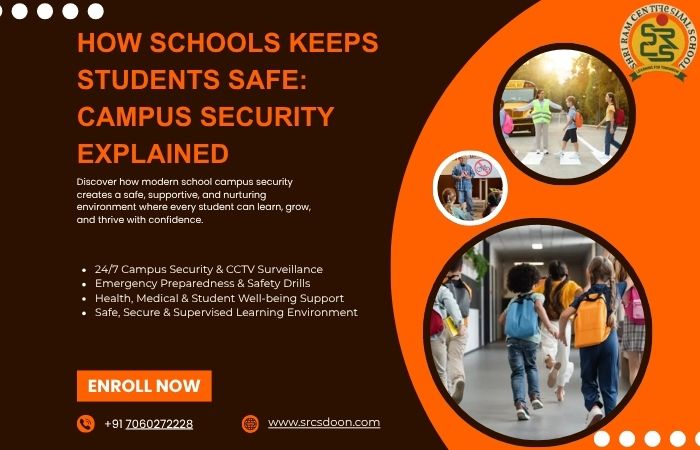
Parents have confidence in schools to have what is most important – the safety and well-being of their children. Academics are certainly still a priority, but a safe learning environment is also key, as students won’t learn well if they don’t feel safe. In modern schools, the management has therefore put considerable effort into creating a secure environment by providing appropriately qualified personnel, up-to-date technology, rigorous policies, and education programmes for students. School safety is no longer just about “locked gates. It encompasses physical security, access to health care, emotional safety, digital safety and emergency preparedness.
You can enhance your campus’s security with a plan that starts with controlled access
The first line of school security begins at the ‘door’. Established schools have gated and fenced entrances and exits with staff members who are trained to monitor visitors and employees. All visitors must be registered, carry identification and obtain permission to be on campus. There are policies in place for parents, vendors and guests to ensure only authorised persons have access to school buildings.
A number of schools also have CCTV surveillance systems installed in strategic areas such as entrances to the building, corridors through the building, play areas and common areas. These cameras not only provide a way to keep an eye on everyday activities; they also serve as a powerful measure to prevent illegal activities. School staff can take prompt action in case of any odd situation occurring due to continuous monitoring.
How School Campus Security Protects Students During School Activities
School campus security is very sensitive when students are present on campus day or night. All pupils are supervised by responsible adults, and they have detailed supervision procedures in place. The classrooms are monitored by the teacher, and the playground, cafeteria, library, laboratories and activity areas are monitored by trained staff for a safe learning environment.
A register of attendance is kept daily, and parents are notified immediately of any unauthorised absence. Further provision of additional staffing to supervise school events, educational visits and sporting activities enhances the security on the school campus and provides additional security for students at all times.
Many schools also have age-appropriate movement policies that offer guidance to younger students; these guide students between classrooms and activity areas safely. These measures enhance accountability, promote safety campaigning, reduce confusion and strengthen the campus security throughout the campus.
Students will participate in emergency preparedness and safety drills
Campus security is well-prepared. Fire drills, earthquake evacuation drills, and emergency response drills are held regularly in the school, and students and staff know their evacuation protocols to take their respective part in emergencies.
Emergency exits are clearly marked, fire extinguishers are placed all over the campus and safety equipment is routinely tested. Staff are trained in first aid and will be made aware of how to effectively make use of emergency procedures.
Practice drills allow students to stay cool and collected – not panicked – at the time of an actual emergency. Children get more confident by doing the same tasks over and over again and learn to follow the rules for their safety.
Health and Medical Support
Student physical health is also important to a safe campus. Most mature schools have medical rooms with a sufficient number of first aid items and trained health workers or nurses.
Where pupils fall ill during lessons, they are looked after, and parents are notified as soon as possible. Schools will also keep health records, allergy information, and emergency contact details so they are able to seek a child’s help in case they require medical help if necessary.
Health checks, promoting hygiene awareness, provision of clean drinking water and healthy nutrition further help to provide a conducive learning environment.
Nobody’s saying we shouldn’t be worried about digital safety, either
Online safety is now increasingly becoming part of campus security, with the rise of a digital classroom. Schools discuss responsible internet use, the prevention of cyberbullying, online privacy and safe communication.
Campus access to the internet is sometimes filtered to ensure that children don’t visit inappropriate websites and teachers are taught how to use the Internet for educational purposes. Digital citizenship programmes provide students with information concerning their proper or inappropriate behaviour in online environments.
Cyber awareness education instills knowledge in young students to help them to be responsible names on the Internet.
Student Well-being and Emotional Safety
Security for the campus goes beyond both a physical and electronic basis. Equally, the role of emotional well-being in supporting pupils’ success is important.
Schools often have staff with counselling skills that help students who are experiencing stress, anxiety, academic pressure and other personal struggles. Policies promote the reporting of concerns freely, and teachers are trained to observe changes in behaviour that could signal an emotional issue and to respond appropriately.
Peer support schemes, mentoring programmes and life skills education also contribute to a peer culture that makes students feel valued and respected, and they are not afraid to ask for help when necessary.
How to keep everyone safe!
Residential school institutions introduce another layer to campus security due to students residing on campus for the entire school year. Boarding schools have oversight and care staff available at all hours of the day, which includes house parents, wardens, residential teachers, and security.
Separate boys’ and girls’ boarding is ensured, access to a secure hostel is available, attendance is checked regularly, and students can receive only permission to get outside on specific days and are monitored constantly to ensure their safety.
Parents are also happy with opportunities to keep up to date with their child’s wellbeing, educational development and daily activities, which offers them additional peace of mind.
SRCS prioritises students’ safety in the following ways:
SRCS Doon is committed to student safety as part of their pursuit of quality education. The school has implemented robust procedures to ensure student safety, and they can learn and enjoy life in the school with confidence.
The campus adopts an orderly entrance of students and keeps concentrated watch throughout the day, and discipline and care of all students are emphasised. Academic hours and co-curricular activities shall all be safe as a result of safety drills, trained staff members and constant surveillance.
In addition to physical security, SRCS Doon is committed to providing a school that is emotionally secure and supportive. Open communication, respect and responsible behaviour are encouraged by teachers, mentors and staff. The school fosters an environment whereby all children can learn and develop without fear – with empathy, understanding and compassion.
School Officers Can Outline Here’s How Parents Can Support School Safety
Parents help build school safety by teaching children to abide by school protocols, exhibit respectful behaviour and learn and adhere to basic emergency protocols. Ensuring the up-to-date maintenance of emergency information, sharing this information with the school and communicating with teachers help make it a safer place for all children. Collaborative partnerships between schools and families create a sense of security and support for children. The modern concept of campus security has to merge aspects of physical safety, healthcare, emotional well-being, and emergency preparedness into a whole. Schools such as SRCS Doon demonstrate this dedication by fostering a safe, nurturing atmosphere where students can thrive academically and personally and develop confidence for the future.
Frequently Asked Questions (FAQ):
Q1. How does school ensure that the places are safe?
Ans: CCTV viewing, deployment and training of security personnel, visitor management systems, checking of students on campus regularly and conducting emergency drills to instil a sense of security inside the campus.
Q2. What purpose do emergency drills serve in schools?
Ans: Ethiopia performs emergency drills that give the students and staff a chance to learn how to evacuate the building during an emergency; this decreases panic during an emergency and helps ensure students are able to come out of school safely and quietly during an emergency.
Q3. How is the safety of pupils safeguarded in boarding schools
Ans: The wardens, teachers on board, as well as security staff provide 24 hours of supervision at the boarding schools. They also offer safe hostels and regular monitoring and tracking and have accessibility which is controlled to ensure that the pupils are safe at all times.
Q4. Who are the people from SRCS Doon that are responsible for keeping students safe?
Ans: SRCS Doon places emphasis on the safety of the student group by providing a safe campus, having experienced staff, conducting drills for safety, having CCTV cameras for monitoring, providing health care and creating a healthy and safe environment that promotes the physical and emotional wellness of students.
Q5. What can parents do for their school to be safe?
Ans: The school should reach out to the parent by maintaining information on emergency contacts, providing information about any medical conditions and speaking with a student frequently about safety procedures.