





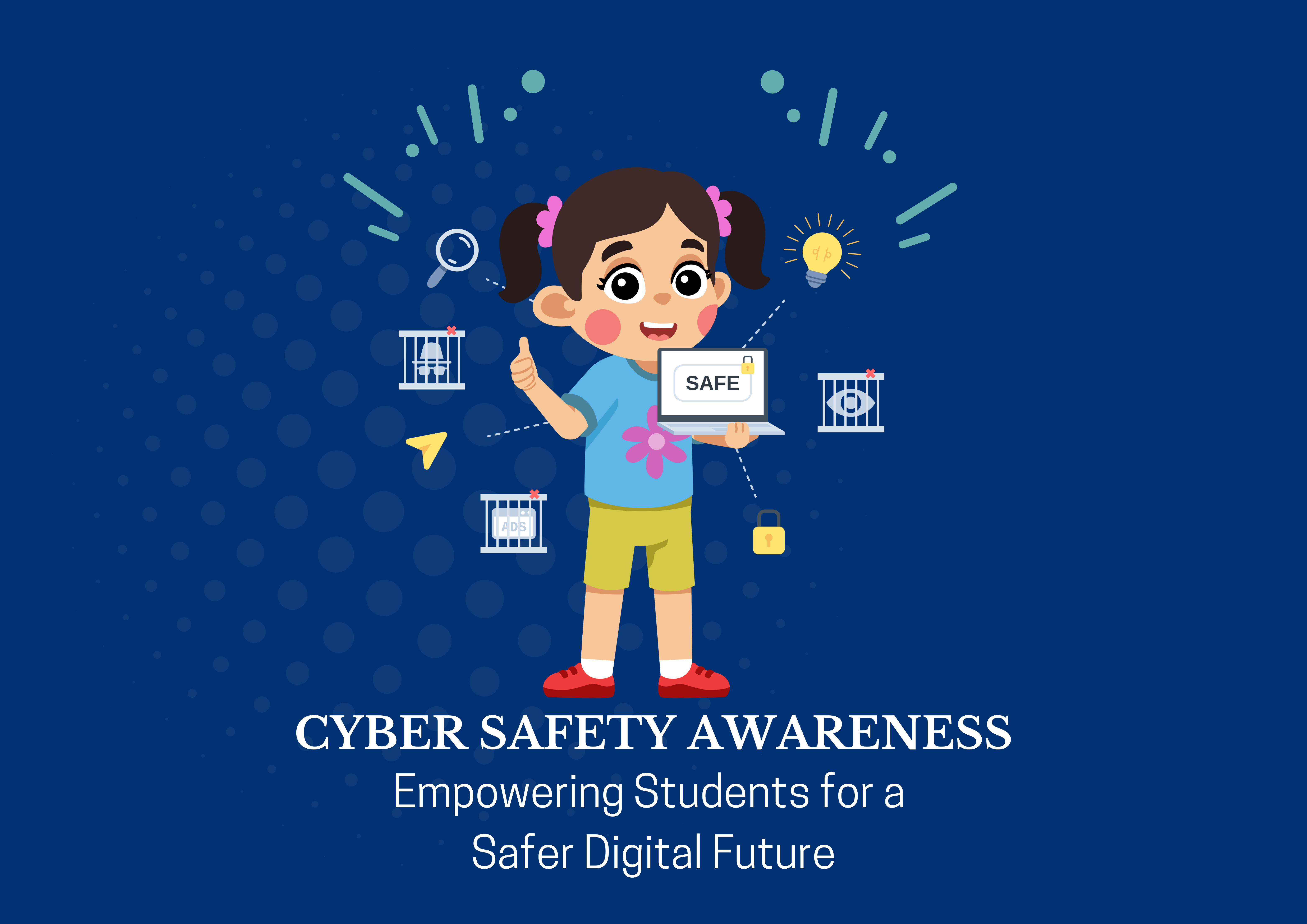
In today’s hyper-connected world, students spend a significant portion of their time online. From attending virtual classes to exploring social platforms and digital learning resources, the internet plays a crucial role in modern education.
However, with this increased screen time comes the responsibility of ensuring safe and responsible digital behavior. This is where Cyber Safety Awareness becomes an essential part of a child’s education.
The Growing Need for Cyber Safety Awareness in Schools

Children, especially school-going students, are increasingly vulnerable to various online threats such as cyberbullying, identity theft, online scams, and exposure to inappropriate content.
Cyber Safety Awareness is not just about knowing the risks; it’s about empowering students with the knowledge, tools, and confidence to navigate the digital world securely.
At Shri Ram Centennial School Dehradun, we recognize that a safe digital environment is foundational to student well-being. That’s why our programs actively focus on Cyber Safety Awareness, making sure every child learns how to protect their online identity and respond to online threats.
This commitment aligns with the evolving digital learning needs in boarding schools in Dehradun, where students spend considerable time on the internet for both academic and recreational purposes.
Key Areas Covered in Cyber Safety Programs

Cyber Safety Awareness involves teaching students:
- The importance of strong, unique passwords.
- How to recognize and report cyberbullying.
- Identifying phishing scams and suspicious links.
- The risks of oversharing personal information.
- Safe browsing habits and privacy settings on apps and devices.
Promoting Active Participation and Engagement

By instilling Cyber Safety Awareness early on, students learn how to think critically about the content they consume and the interactions they engage in online.
Unlike passive instruction, effective cyber safety programs encourage active participation through workshops, interactive modules, real-life scenarios, and open discussions.
Bridging the Gap in Traditional Education

One of the significant gaps in traditional education has been the lack of regular digital safety education. While schools focus on academic achievements, equipping children with the skills to stay safe online is just as important.
With comprehensive Cyber Safety Awareness programs, this gap is being addressed, ensuring that digital literacy also includes digital responsibility.
Role of the School Community

The role of parents, teachers, and peers is vital in reinforcing cyber safety principles. Schools must create an ecosystem where students feel safe discussing online experiences, reporting concerns, and learning without fear.
As technology continues to evolve, so must our strategies to keep our children safe. Encouraging open conversations at home and in classrooms is crucial in identifying early signs of cyber threats. When students know they can trust the adults around them, they are more likely to seek help and take preventive action.
Educational institutions must also integrate continuous training sessions for teachers and parents, ensuring that they stay updated on the latest cyber trends and risks.
This collaborative approach creates a supportive digital environment that promotes resilience, accountability, and awareness.
Professional Guidance for Long-Term Impact

Moreover, the involvement of trained counselors and IT professionals in conducting cyber safety sessions has shown tremendous success. These sessions not only educate but also demystify complex cyber threats, making students more confident in handling them.
Cyber Safety Awareness empowers students to become responsible digital citizens who use technology for growth rather than falling prey to its dangers.
Conclusion
In conclusion, promoting Cyber Safety Awareness is no longer optional—it’s a necessity. As students become more tech-savvy, they must also become more security-savvy.
Schools like Shri Ram Centennial School Dehradun are setting the standard by integrating safety into their digital education framework. By doing so, they are shaping a generation that is not only digitally smart but also digitally safe.
These proactive measures create an environment where students can explore, innovate, and connect without fear. Ultimately, fostering a culture of cyber awareness ensures long-term digital well-being for the students of today and tomorrow.




I appreciate how this post frames cyber safety as part of empowering students, not just restricting them. Helping them make informed choices is key to building long-term digital confidence.