




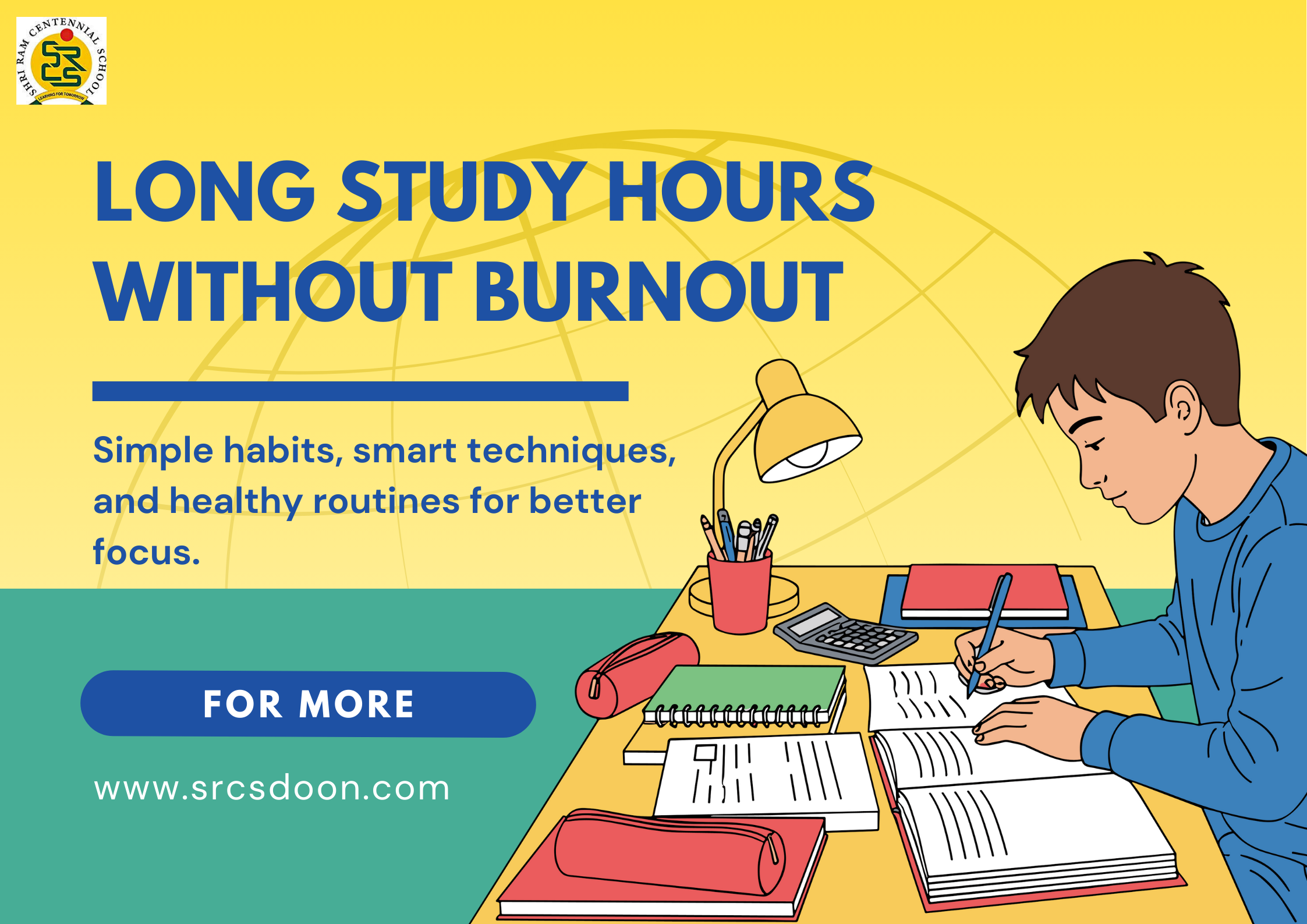
Studying for long hours is no longer limited to exam season. With competitive academics, entrance tests, and continuous assessments, students are often required to maintain focus for extended periods. However, studying longer does not always lead to better results. Fatigue, distraction, and mental overload can reduce productivity and harm learning outcomes.
This guide explains how students can study for long hours without getting tired by using evidence-based strategies, structured routines, and healthy habits. It is written for students, parents, and educators who want sustainable academic success rather than short-term cramming.
Why Students Feel Tired While Studying

Mental tiredness occurs when the brain is overworked without adequate recovery. Continuous concentration drains glucose levels in the brain, slows information processing, and weakens memory formation. This is why students often feel sleepy, restless, or irritated after long, unstructured study sessions.
Another major cause is passive learning. Simply reading textbooks or memorizing notes without engagement leads to faster mental exhaustion. Poor posture, irregular sleep, dehydration, and emotional stress further accelerate fatigue, making long study hours feel overwhelming.
Understanding these causes helps students shift from forceful studying to smarter learning.
Preparing the Right Study Foundation

Create a Focus-Oriented Study Space
The physical environment directly affects mental stamina. A quiet, well-ventilated, and well-lit study area reduces eye strain and helps maintain alertness. A dedicated desk free from clutter allows the brain to associate the space with concentration and discipline.
Students across different academic settings, whether studying at home or attending a structured school in india, benefit from having a consistent study environment that supports routine and focus.
Set Clear and Achievable Study Targets
Long study hours become manageable when divided into specific goals. Instead of planning to study for an entire day, students should break subjects into smaller topics with defined time limits. This creates a sense of progress and reduces mental pressure.
Clear targets also prevent overstudying one topic while neglecting others, ensuring balanced preparation.
Study Techniques That Prevent Fatigue

1) Use Active Learning Methods
Active learning keeps the brain engaged for longer periods. Techniques such as self-explanation, note-making in your own words, solving practice questions, and teaching concepts aloud improve understanding while reducing boredom.
Switching between reading, writing, and problem-solving activates different cognitive areas, helping students sustain longer study sessions without feeling drained.
2) Follow Focused Study Cycles
Studying in structured cycles is one of the most effective ways to prevent tiredness. A focused session of 40–50 minutes followed by a short 5–10 minute break allows the brain to reset without losing momentum. During breaks, light stretching or walking is more refreshing than screen use.
This approach reflects the principle of Study Smart, where efficiency and mental health are prioritized over continuous hours.
Physical Habits That Support Long Study Hours

1) Maintain Correct Posture and Movement
Sitting in an incorrect posture for long hours restricts blood circulation and leads to physical discomfort, which eventually affects concentration. Sitting upright with relaxed shoulders and feet placed firmly on the floor helps maintain alertness.
Incorporating short movement breaks improves circulation and reduces stiffness, allowing students to return to studying with renewed focus.
2) Eat and Hydrate for Brain Performance
The brain requires steady energy to function efficiently. Skipping meals or relying on sugary snacks causes sudden energy drops. Balanced meals with whole grains, fruits, vegetables, nuts, and proteins support sustained concentration.
Proper hydration is equally important. Even mild dehydration can reduce attention span and memory, making long study hours more tiring than necessary.
Managing Mental Challenges During Long Study Sessions

1) Reducing Distractions and Mental Overload
Distractions are not always external. Anxiety, fear of exams, and overthinking consume mental energy and reduce focus. Writing down concerns before studying helps clear mental space and improves concentration.
Digital distractions should be controlled by silencing notifications, using website blockers, or keeping mobile devices away during study time.
2) Handling Motivation Slumps
Motivation naturally fluctuates during long academic periods. Relying solely on motivation often leads to inconsistency. A fixed routine ensures progress even on low-energy days. Tracking daily achievements and rewarding small milestones helps maintain long-term discipline.
Support from parents and educators also plays a key role in reinforcing confidence and reducing academic pressure.
The Role of Sleep and Recovery in Long Study Hours
Sleep is essential for memory consolidation and emotional stability. Students who sacrifice sleep to study longer often experience reduced comprehension and slower recall the next day.
Maintaining a consistent sleep schedule improves learning efficiency, making study hours more productive and less exhausting. Quality rest allows the brain to recover and prepare for the next study session.
Benefits of Studying Long Hours the Right Way

-
Builds strong self-discipline and consistency in daily study routines
-
Improves time management by helping students plan and prioritize tasks effectively
-
Enhances deep subject understanding rather than surface-level memorization
-
Increases confidence through regular and structured preparation
-
Reduces exam anxiety by eliminating last-minute pressure
Common Mistakes That Reduce Study Efficiency

-
Assuming longer study hours automatically lead to better results
-
Ignoring early signs of mental and physical burnout
-
Studying continuously without planned breaks
-
Repeatedly revising the same content without active engagement
-
Constantly comparing study schedules or progress with peers
Conclusion: Sustainable Study Habits Lead to Better Results
Studying for long hours without getting tired is not about pushing the mind beyond its limits. It is about understanding how the brain works and supporting it with structure, balance, and recovery. With the right environment, active learning strategies, healthy routines, and adequate rest, students can extend their study capacity naturally.
For parents and educators, guiding students toward sustainable study habits is as important as academic instruction. When learning becomes consistent and well-managed, long study hours transform from a burden into a powerful tool for success.
Frequently Asked Questions
1. How many hours should a student study in a day?
Most students can study effectively for 5–7 focused hours a day. Quality, breaks, and revision matter more than total hours.
2. Why do students feel sleepy while studying for long hours?
Sleepiness usually occurs due to mental fatigue, poor sleep routine, dehydration, or passive studying methods like only reading.
3. What is the best time to study for long hours?
The best time varies by individual, but early morning and late evening are generally ideal due to fewer distractions and better concentration.
4. How can I increase concentration while studying for long hours?
Using active learning techniques, setting small goals, and studying in timed sessions with short breaks improves concentration significantly.
5. Is studying continuously without breaks effective?
No. Continuous studying reduces retention. Short breaks help the brain recover and improve memory and understanding.