


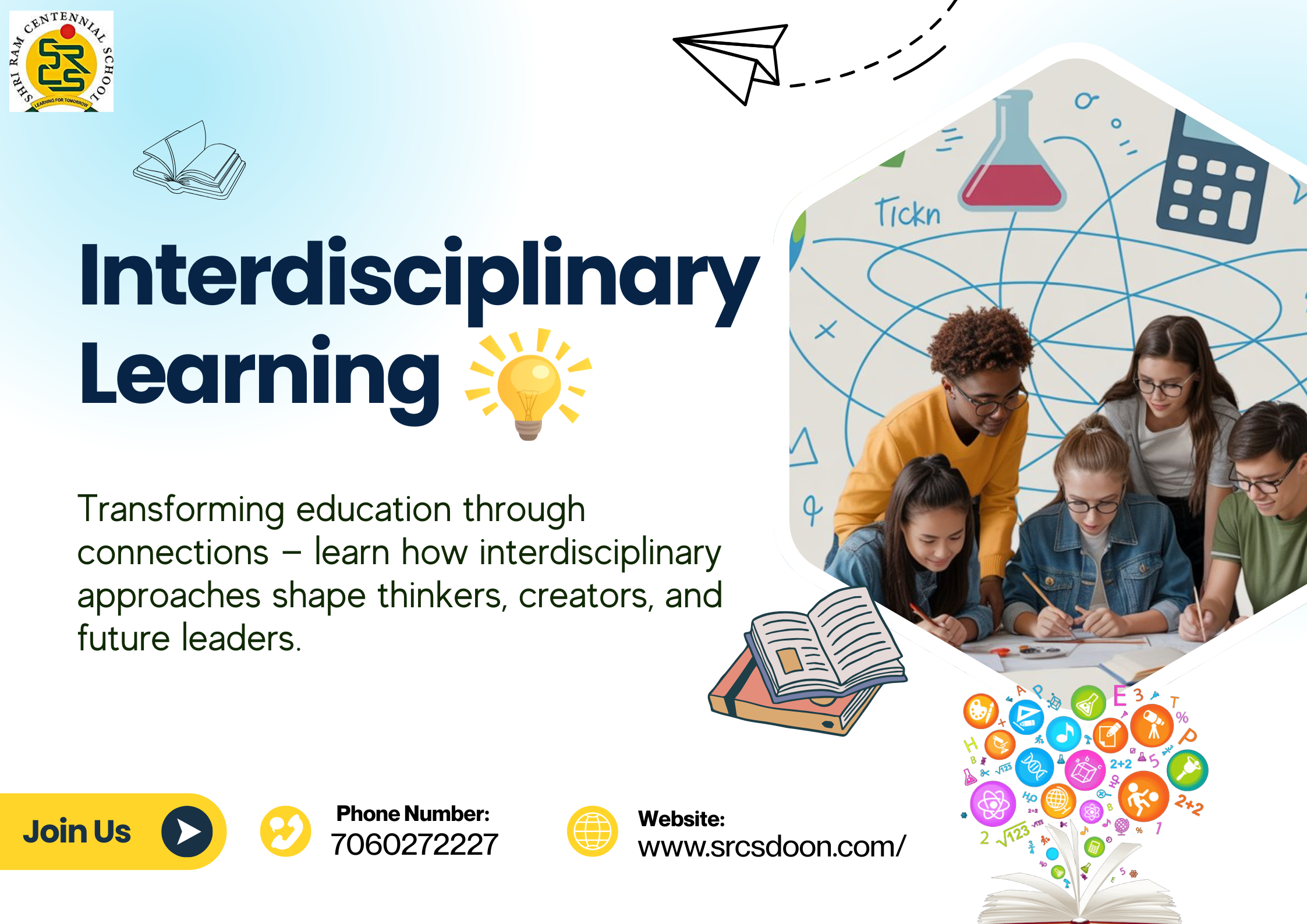
In today’s world, real-life challenges demand a mix of skills, making interdisciplinary learning essential. Many Indian schools are adopting this approach, connecting different subjects to prepare students for practical problem-solving.
For instance, creating an app combines technical skills with user behavior, while starting a business requires economics, communication, and creativity. This hands-on learning method is increasingly seen in top boarding school across the country, especially in Dehradun.
What Are Interdisciplinary Subjects?
Interdisciplinary subjects combine the concepts and methods of two or more academic disciplines to explore complex issues from multiple angles. Instead of viewing knowledge as isolated pieces, students learn how different fields interact in real life.
Examples include:
-
Environmental Studies (Biology + Geography + Civics)
-
Business Studies (Math + Economics + Psychology)
-
Artificial Intelligence (Computer Science + Ethics + Linguistics)
This blend gives students a broader understanding of how knowledge works together — much like it does outside the classroom.
How Interdisciplinary Subjects Bridge Classroom Learning and Real Life

By encouraging connections between subjects, interdisciplinary learning helps students view the world holistically. This method is especially valuable for learners in schools in India, where academic success is often exam-focused. Interdisciplinary education shifts the focus from memorization to understanding and practical application.
1. Builds Critical Thinking and Analytical Skills
Students encounter complex, open-ended problems that require reasoning and analysis from multiple perspectives. This process strengthens their critical thinking, preparing them for academic and career success.
2. Encourages Creativity and Innovation
When learners connect ideas from different disciplines — such as applying design thinking to scientific challenges — they become more creative. This combination of logic and imagination is the foundation of innovation.
3. Enhances Communication and Collaboration
Many interdisciplinary projects involve teamwork. Students learn to communicate clearly, respect diverse opinions, and collaborate effectively — vital skills in today’s professional world.
4. Promotes Real-World Problem Solving
Most global issues — from climate change to technology ethics — require multi-disciplinary solutions. Interdisciplinary education helps students relate classroom knowledge to real-life challenges, turning theory into meaningful action.
Interdisciplinary Learning in Practice

Modern schools in India are implementing interdisciplinary learning through diverse methods:
-
Project-Based Learning (PBL): Students engage in real-world projects connecting multiple subjects, such as designing a model city using math, geography, and civics.
-
Integrated Assessments: Evaluations that measure how students apply concepts across subjects rather than testing them separately.
-
Collaborative Teaching: Teachers co-plan lessons from different disciplines to create unified, engaging learning experiences.
These approaches promote deeper understanding and long-term retention while making learning more interactive.
Real-Life Skills Developed Through Interdisciplinary Subjects

Beyond academic excellence, interdisciplinary education nurtures essential life skills that prepare students for college, careers, and community life:
-
Decision-Making: Evaluating multiple viewpoints sharpens judgment.
-
Adaptability: Learning across subjects builds flexibility and resilience.
-
Time Management: Handling multi-disciplinary projects improves planning and execution.
-
Ethical Reasoning: Considering social and scientific perspectives fosters responsible decision-making.
Interdisciplinary Subjects and Career Readiness

The job market of the future values individuals who can blend technical expertise with creativity and problem-solving — traits that interdisciplinary learning builds. Many schools in India now design their programs with this in mind.
For example:
-
A Data Analyst merges statistics, business insight, and storytelling.
-
A Product Designer draws from psychology, art, and engineering.
-
A Climate Researcher integrates science, policy, and economics.
By cultivating cross-domain thinking, schools prepare students to succeed in emerging fields like sustainability, UX design, digital marketing, and AI.
Making Interdisciplinary Learning Engaging

For interdisciplinary education to truly thrive, it must be engaging and relevant. Schools can:
-
Encourage curiosity-driven exploration rather than rote memorization.
-
Use real-world case studies and experiential learning.
-
Organize group projects that match students’ strengths.
-
Include field trips, expert talks, and interactive sessions to connect theory with practice.
By doing so, schools in India make learning more meaningful and fun, motivating students to see knowledge as an interconnected web rather than isolated chapters.
Conclusion
In a rapidly evolving world, interdisciplinary subjects are the bridge between classroom knowledge and real-life application. By integrating multiple disciplines, schools in India help students develop analytical, creative, and problem-solving skills — essential traits for success in both academics and life. This holistic approach transforms education into a lifelong learning journey, ensuring that students are not just exam-ready, but future-ready.
Frequently Asked Questions (FAQs) on Interdisciplinary Learning
Q1. What is interdisciplinary learning in schools?
Interdisciplinary learning combines knowledge from multiple subjects to solve real-world problems. Instead of studying subjects separately, students learn how disciplines like science, math, and art connect and complement each other.
Q2. Why is interdisciplinary education important in today’s world?
It prepares students for modern challenges by building critical thinking, creativity, and problem-solving skills. These abilities help learners apply classroom knowledge to practical, real-life situations.
Q3. How do interdisciplinary subjects differ from traditional subjects?
Traditional subjects focus on individual disciplines, while interdisciplinary subjects blend concepts from two or more fields — for example, Environmental Studies merges biology, geography, and civics to understand real-world environmental issues.
Q4. What life skills does interdisciplinary learning build?
It enhances adaptability, decision-making, time management, ethical reasoning, and communication — all essential for success in higher education and professional careers.
Q5. How do interdisciplinary projects help students?
They promote teamwork, innovation, and analytical thinking. Students learn to communicate ideas effectively, think across disciplines, and develop real-world solutions through project-based learning.