


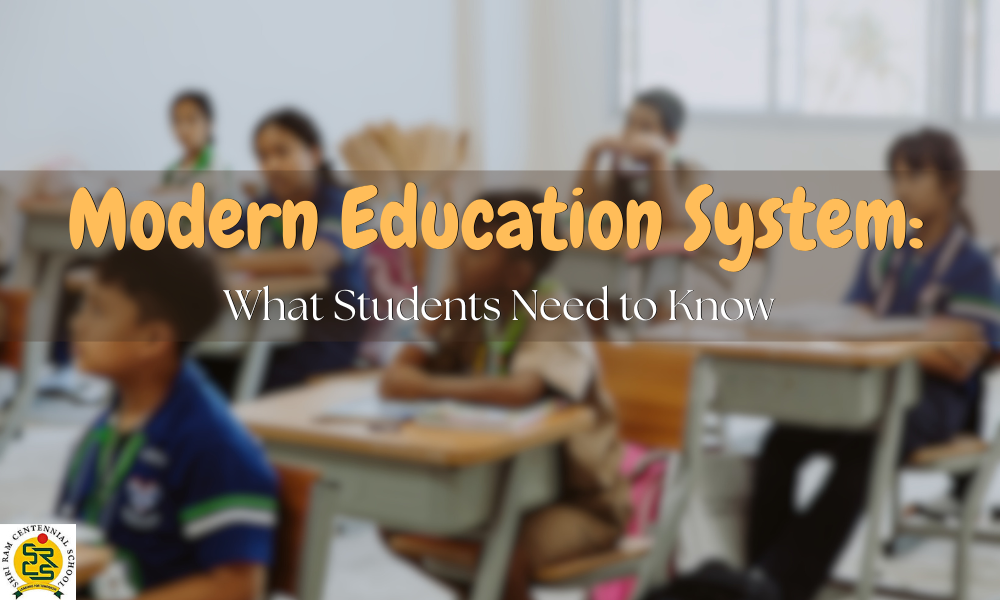
In recent years, the modern education system has transformed significantly due to rapid advancements in technology, new teaching methods, and evolving student needs.
Today’s students are growing up in a world that is interconnected, fast-changing, and highly competitive. To prepare them for this environment, educational institutions have moved beyond traditional classroom learning.
Schools in Dehradun, for instance, have become pioneers in adopting these changes by integrating smart classrooms, skill-based learning, and value education, helping students become future-ready in every sense.
What Is Modern Education?
Modern education refers to an evolved learning system that enhances academic learning through innovative teaching methods, technology, and student-focused approaches. Its primary goal is to support the overall development of learners by nurturing creativity, imagination, visualization, and critical thinking skills.
Unlike conventional systems that rely heavily on textbooks and memorization, modern education promotes practical learning. Students are encouraged to explore concepts, solve problems, and apply knowledge in real-life situations. Digital tools such as smart classrooms, computers, interactive content, and online learning platforms are integral to this system.
In the 21st century, most educational institutions have adopted modern education practices, though some still retain traditional approaches. One significant aspect of modern education is the growing emphasis on online learning, which offers flexibility, accessibility, and personalized learning opportunities for students.
Who Introduced Modern Education in India?
Modern education in India was introduced during the British colonial period by Lord Thomas Babington Macaulay in the 1830s. His contribution became formalized on February 2, 1835, through the well-known Minute on Indian Education.
Macaulay advocated for English as a compulsory language of instruction and promoted Western science and literature alongside subjects such as Mathematics and Science. During British rule, several institutions and universities were established based on Western curricula, which significantly transformed the Indian education framework.
Over time, this system evolved further and adopted global educational practices. Today, modern education incorporates STEAM principles—Science, Technology, Engineering, Arts, and Mathematics—to encourage interdisciplinary learning and innovation.
Understanding Traditional Education

1) Philosophy and Learning Style
Traditional education is based on a teacher-centered approach. Teachers act as the primary source of knowledge, and students are expected to listen, memorize, and reproduce information during examinations.
The focus is mainly on theoretical understanding, moral values, discipline, and uniformity. Learning is structured, predictable, and syllabus-driven, leaving limited space for creativity or independent exploration.
2) Assessment and Academic Structure
Examinations play a central role in traditional education. Student performance is evaluated largely through written tests that measure memory and subject knowledge. While this system builds strong academic foundations, it may not always develop practical skills required beyond classrooms.
What Defines the Modern Education System
Student-Centered Learning Philosophy
Modern education places the learner at the center of the process. Instead of passive listening, students are encouraged to ask questions, explore concepts, and engage actively in their learning journey.
Teaching focuses on understanding, reasoning, and application rather than rote memorization. One widely adopted approach in this system is the Socratic Method, which promotes critical thinking through guided questioning and discussion.
Integration of Technology in Learning
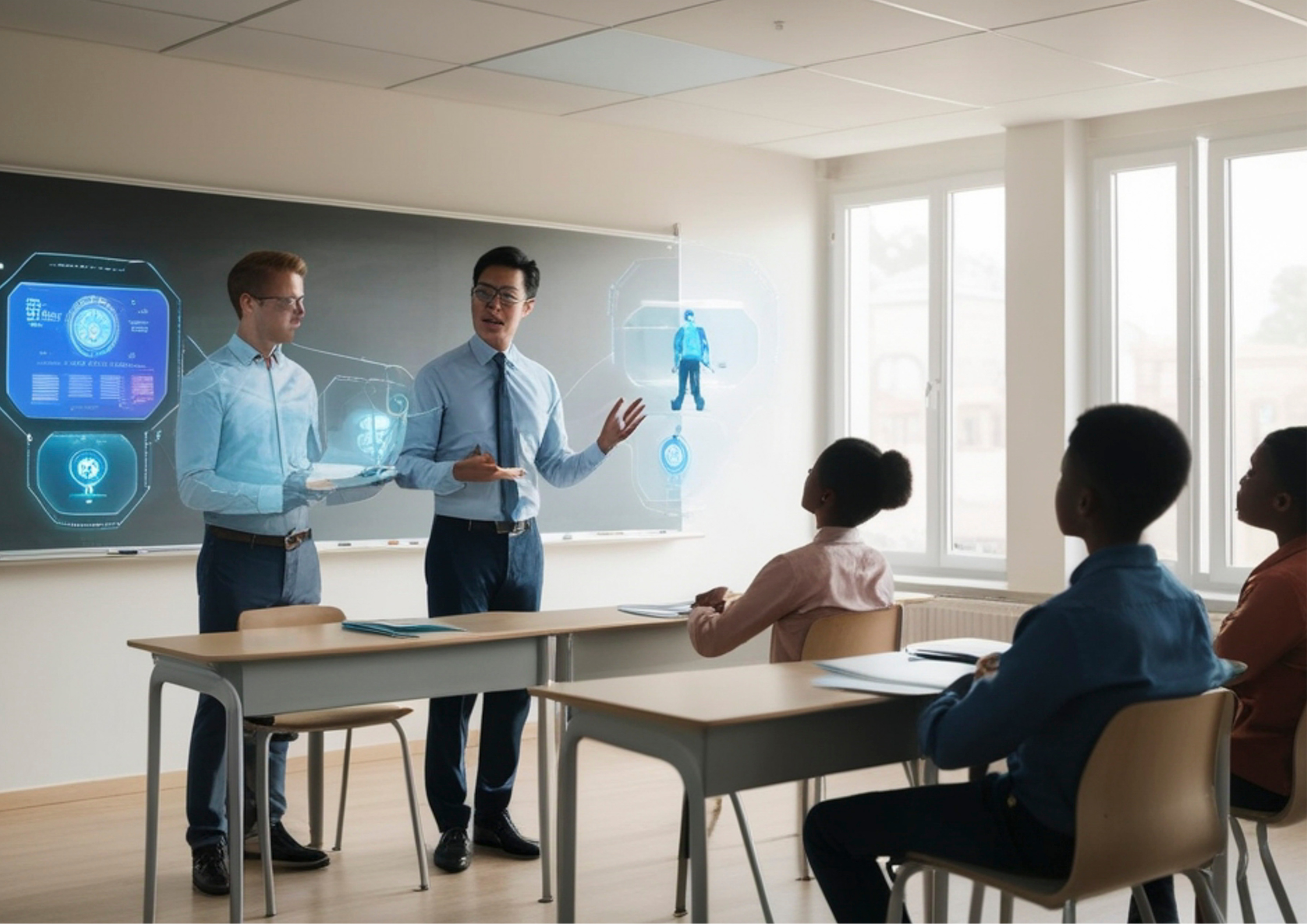
Technology plays a significant role in modern classrooms. Digital tools, online resources, smart boards, and interactive platforms make learning more engaging and accessible.
Students can explore global perspectives, collaborate virtually, and learn at their own pace. This exposure helps bridge the gap between theoretical knowledge and practical understanding.
Holistic Skill Development
Beyond academics, modern education emphasizes life skills such as communication, creativity, adaptability, and emotional intelligence. Group projects, presentations, and experiential learning help students build confidence and teamwork abilities.
This approach recognizes that success in today’s world depends not only on knowledge but also on how effectively that knowledge is applied.
Key Differences Between Modern and Traditional Education

Learning Environment
Traditional education follows a rigid classroom setup, while modern education encourages flexible learning spaces, including virtual classrooms and collaborative environments.
Role of Teachers
In traditional systems, teachers are information providers. In modern systems, they act as facilitators and mentors who guide students toward independent thinking.
Evaluation Methods
Modern education uses diverse assessment tools such as projects, presentations, peer reviews, and continuous evaluation, rather than relying solely on final exams.
Curriculum Design
Traditional curricula are fixed and theory-heavy. Modern curricula are dynamic, skill-oriented, and frequently updated to match real-world requirements.
How the Modern Education System Benefits Students

1. Promotes Active Learning
Instead of passively receiving information, students participate in discussions, debates, and problem-solving sessions. This active involvement improves understanding and retention.
2. Encourages Creativity and Innovation
From design thinking classes to science exhibitions and coding marathons, the modern education provides platforms for students to explore their creative sides.
3. Develops Real-World Skills
Project-based learning and internships help students understand how academic knowledge applies in real life. This prepares them better for higher studies and jobs.
Challenges Faced by Students in the Modern Education System

While the new model brings many advantages, it also has challenges:
A. Digital Distractions
Excessive screen time can lead to distractions, reducing productivity and focus.
B. Unequal Access
Not all students have equal access to digital tools, especially in rural areas.
C. Pressure to Perform
Continuous evaluation and competitive environments can create stress among students.
Despite these challenges, with the right guidance and balance, students can thrive in the modern ecosystem.
Tips for Students to Succeed in the Modern Education System

1. Stay Curious and Keep Learning
Don’t limit your learning to textbooks. Explore online courses, podcasts, documentaries, and virtual labs to deepen your understanding.
2. Build Digital Literacy
Learn how to use educational apps, manage digital notes, and protect your online privacy. Being tech-savvy is essential in the modern education.
3. Develop Soft Skills
Work on communication, teamwork, and emotional intelligence. These are equally important as academic performance.
4. Create a Balanced Routine
A well-planned daily routine that includes study, hobbies, physical activity, and rest helps maintain mental and emotional health.
Conclusion
The modern education system is not just about using new technology—it’s about changing the way students think, learn, and grow. It values creativity, adaptability, emotional intelligence, and real-world skills.
To succeed, students need to embrace this change with open minds and a willingness to explore beyond textbooks.
Whether you’re studying in a metro city or attending one of the forward-thinking Schools in Dehradun, being prepared and proactive is the key to making the most of what the modern education has to offer.
Frequently Asked Questions (FAQs)
1. What is modern education in simple words?
Modern education focuses on student-centered learning, practical knowledge, creativity, and the use of technology to improve understanding and skills.
2. How is modern education different from traditional education?
Modern education emphasizes critical thinking, flexibility, and real-world application, while traditional education focuses more on memorization and theory.
3. Why is modern education important in the 21st century?
Modern education prepares students with practical skills, digital literacy, and adaptability needed for today’s global and competitive world.
4. Who introduced modern education in India?
Modern education in India was introduced during the British era by Lord Thomas Babington Macaulay in 1835.
5. Does modern education support online learning?
Yes, online learning is a key part of modern education, offering flexible, accessible, and technology-driven learning opportunities.