

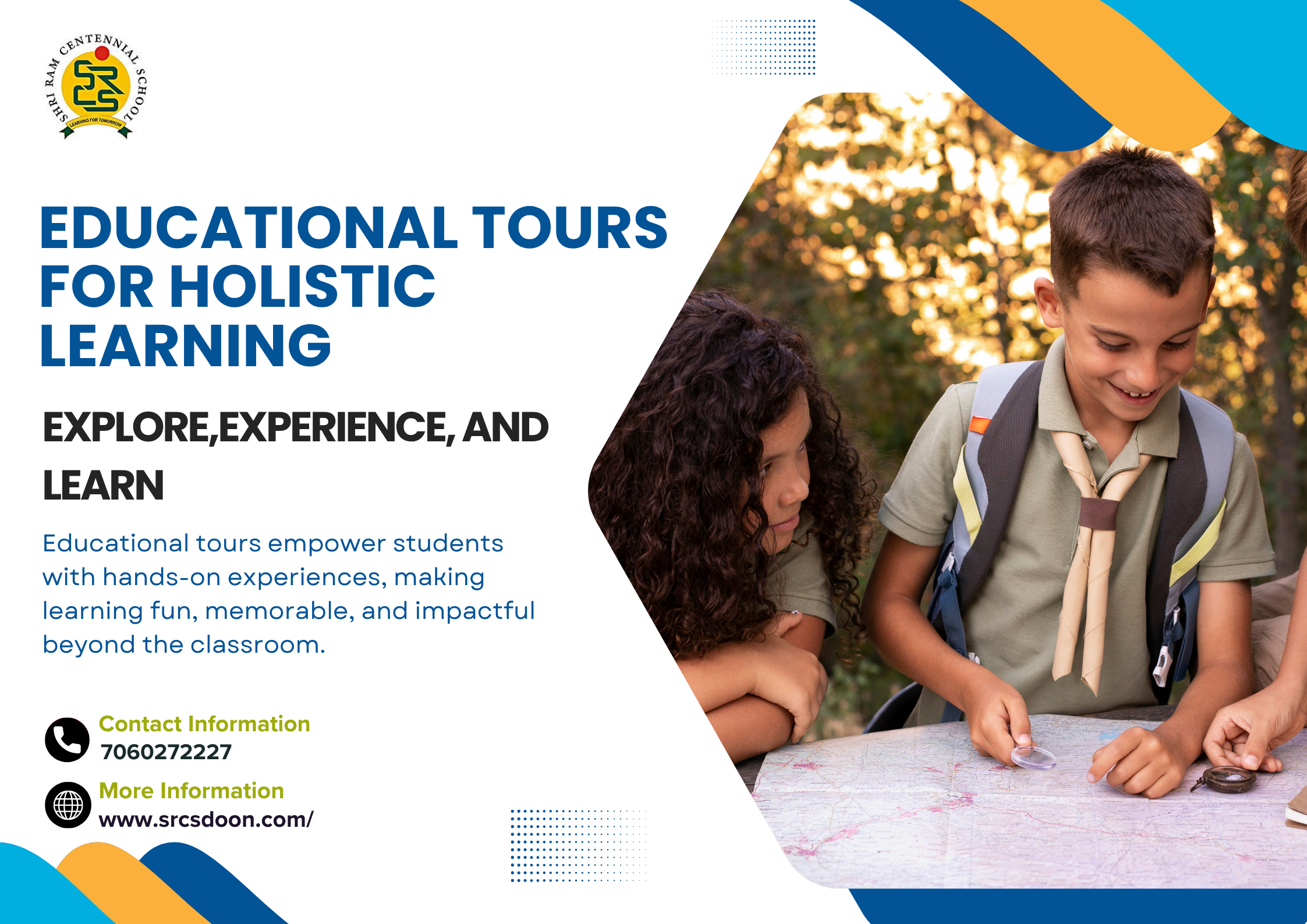
Educational tours are powerful learning opportunities rather than just leisure travel. These trips expose young minds to new concepts, perspectives, and abilities, whether they are to a science center, a historical monument, or a site of cultural heritage.
The importance of educational tours becomes even more evident in today’s world, where practical expertise is as valuable as theory. They help bridge the gap between classroom learning and real-world exposure. Such schools provide their students with a tremendous benefit—academic and otherwise.
What Are Educational Tours?
Educational tours are school-sponsored excursions to places that have educational significance—such as museums, science parks, industries, historical sites, nature reserves, and others.
These tours aim to:
- Reinforce classroom lessons
- Encourage real-life learning
- Improve observation and critical thinking abilities
- Foster social and emotional development
Top Benefits of Educational Tours for Students
Let’s deconstruct how educational tours actually benefit students—not only academically but in life.
1. Makes Learning Fun and Practical
Reading about a volcano is one thing. Having a model erupt or observing a geology park is another. Educational tours make it possible for students to live what they read, hence making the topic more engaging and memorable.
2. Enhances Memory and Retention
When children observe, listen, and engage with their environment while going on a tour, they retain information longer. This type of learning lasts longer than only reading or listening within the classroom.
3. Enhances Communication and Teamwork Skills
Educational tours are usually conducted in groups. Students engage with other students, guides, and instructors in new environments, which automatically enhances their communication, cooperation, and leadership skills.
4. Fosters Curiosity and Autonomous Thinking
Beyond the classroom, students question more. They become curious. They form their own observations and conclusions. This instills self-confidence and autonomous thinking—aptitudes that are crucial in today’s world.
5. Decreases Academic Stress
Let’s face it—school can be stressful. School tours provide a welcome relief. They allow students to unwind, recharge, and come back to school with renewed vigor.
6. Encourages Cultural Sensitivity and Tolerance
When students travel to rural villages, tribal museums, or heritage sites, they are exposed to alternative ways of life, customs, and cultures. This makes them more tolerant, open-minded, and respectful.
7. Career Exposure and Future Planning
Certain educational tours expose students to industries, colleges, science labs, or companies. Such exposure provides students with real-world perspectives of various professions and makes them consider future careers.
How Schools Can Plan Effective Educational Tours
Organizing a successful educational tour takes planning, but the impact is worth it. Here are a few steps schools can follow:
1. Link It to the Curriculum
Every tour should have a clear educational purpose. If you’re teaching about Indian independence, plan a trip to a freedom fighter museum. Teaching environmental science? A visit to a recycling plant works great.
2. Ensure Student Engagement
Encourage students to:
-
Keep travel journals
-
Take photos and create reports or presentations afterward
-
Work on group assignments based on their learnings
This reinforces lessons and builds communication skills.
3. Ensure Safety and Accessibility
Tours should be inclusive, safe, and well-supervised. Schools should:
-
Get all permissions in advance
-
Have proper staff-to-student ratio
-
Share emergency contacts with parents
-
Carry medical kits and follow safety protocols
Key Learning Areas Covered in Educational Tours
Here are some subjects and how tours enhance them:
|
Subject |
Tour Example |
Learning Outcome |
|
Science |
Planetariums, Science Parks |
Hands-on experiments and observation |
|
History & Civics |
Historical Sites, Museums |
Real-world understanding of the past |
|
Geography |
Eco-Parks, Geological Sites |
Awareness of landscapes, climate |
|
Economics/Commerce |
Industrial Tours, Banks, Stock Markets |
Exposure to real financial systems |
|
Environmental Ed. |
Forests, Wildlife Sanctuaries |
Conservation awareness |
How Schools Can Plan Effective Educational Tours
Planning a school trip needs careful planning. Here’s how schools can make it smooth and successful:
- Set definite learning objectives – What will the students learn?
- Select suitable venues – Suitable venues according to grades.
- Add interactive components – Hands-on activities, quizzes, or journals.
- Be safe and have necessary permissions – Trained personnel, emergency phone numbers, and first-aid kits.
- Obtain parental participation – Inform parents and keep them involved.
Conclusion
Educational tours are essentials, not extras. They offer the type of world experience and learning that no textbook can provide. These experiences often turn out to be the most valued and significant during a child’s educational journey.
For teachers and parents, the message is simple: Support educational tours. Champion them. Encourage schools to include them as a standard part of the curriculum.
Frequently Asked Questions (FAQs)
Q1. What is the primary objective of educational tours in schools?
The goal is to provide experiential learning, reinforce classroom knowledge, and help students grow socially, emotionally, and academically.
Q2. How often should schools organize educational tours?
Ideally once every term or at least once a year, depending on the academic schedule and budget.
Q3. Are educational tours safe for younger students?
Yes, with proper planning, supervision, and safety protocols, tours can be perfectly safe and enriching for all age groups.
Q4. Are educational tours compatible with the curriculum?
Yes. Intelligent schools couple tour locations with syllabus items for the greatest learning potential.
Q5. Are educational tours pricey?
Not at all. Lots of low-cost local choices offer excellent learning value. Some schools even partner with organizations to reduce costs.