





In an age defined by rapid technological change and ever-evolving career landscapes, traditional teaching methods are no longer enough.
Project based learning today has helped students in being adaptable, curious, and capable of solving real-world problems.
That’s why many forward-thinking educators at boarding schools in Uttarakhand are embracing project-based learning as a powerful alternative to conventional classroom instruction.
Unlike traditional rote learning where students memorize information for exams, this type of learning technique places them at the center of their own learning journey.
It focuses on real-life challenges, collaboration, creativity, and independent thinking. Through hands-on, inquiry-driven projects, students learn to think critically, communicate effectively, and solve problems with confidence.
It’s not just about what they learn, but how they learn—and that’s what makes all the difference.
What is Project-Based Learning?

Project-based learning (PBL) is a learner-centered approach to education that inspires learning through the discovery and completion of authentic projects.
Rather than listening to lectures and reciting textbook information, students engage actively in worthwhile work, usually spanning days or weeks, that relates academic concepts to the real world.
Whether it’s building a model, writing a research paper, developing a prototype, or launching a small campaign, students become researchers, creators, and problem-solvers. And this makes all the difference.
How Project-Based Learning Impacts Student Thinking

It helps students develop skills that go far beyond the classroom. Here’s how it’s reshaping student thought:
Encourages Deeper Understanding
Students don’t merely learn “what” something is—they investigate “why” and “how” it functions. This method fosters long-term comprehension over short-term memorization.
Fosters Independent Thought
PBL enables students to be independent thinkers. They are challenged to question, to find answers, and to form conclusions independently.
Enhances Critical Thinking
With each choice they make—what to study, how to present, or what solution to recommend—students continually analyze and improve their ideas.
Fosters Collaboration
Most projects are completed in groups, encouraging teamwork, communication, and mutual responsibility. These are essential skills in both higher education and the workplace.
Builds Real-World Connections
One of the greatest benefits of project-based learning is that it integrates lessons into everyday life. Students learn why what they’re learning matters, making them more interested and motivated.
Project-Based Learning in Practice
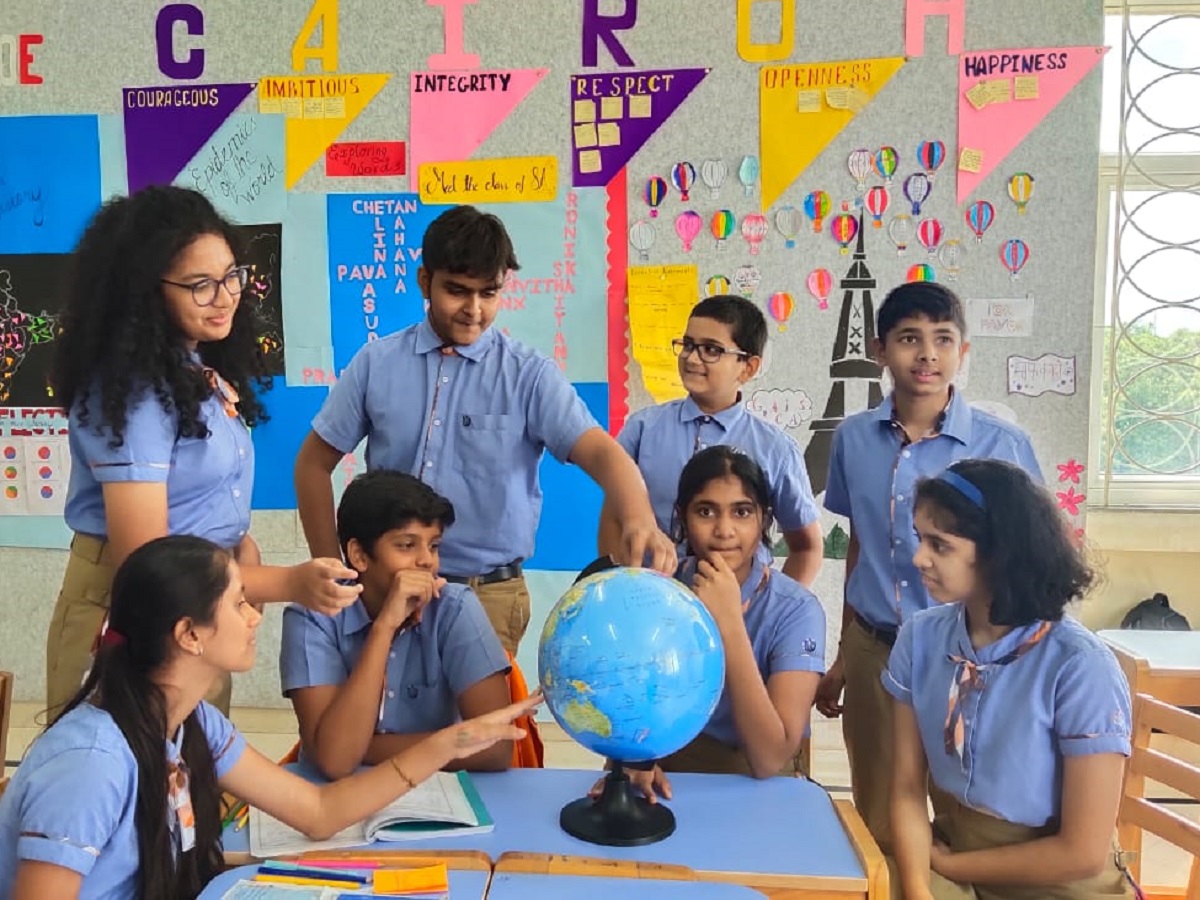
To get an idea of how this learning technique operates, the following are some sample classroom situations:
- Science: Students build a functional model of a water purification system to learn about environmental sustainability.
- Social Studies: Students do interviews and create a photo-journal of local heritage and culture.
- Math: Students work in groups to plan a frugal trip using actual data on accommodation, transportation, and currency exchange.
- English: Students script and stage original plays around social concerns, merging literature with civic consciousness.
These projects don’t only solidify subject matter—they foster confidence, research skills, presentation skills, and empathy.
Why Schools Are Adopting Project-Based Learning
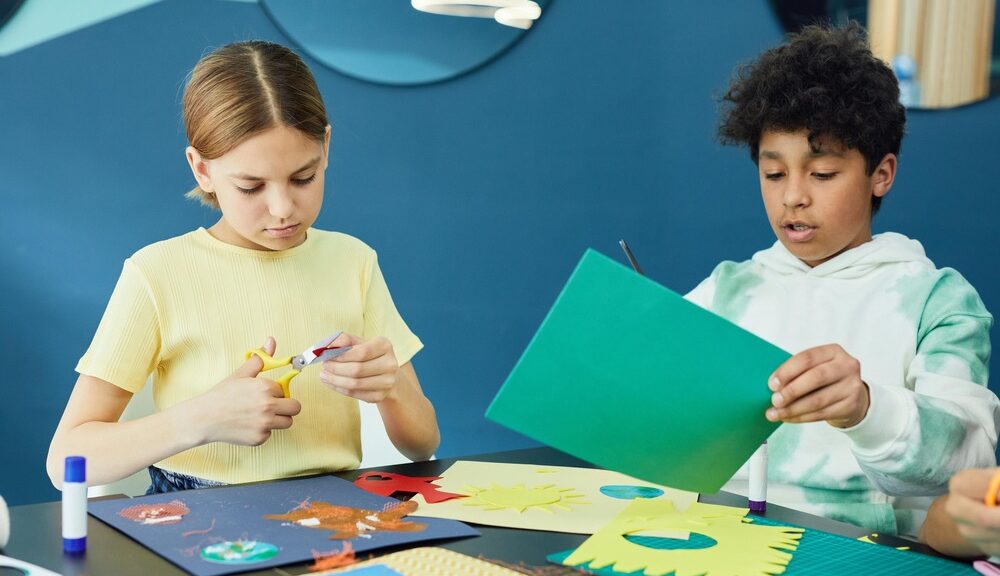
Schools everywhere, including India’s progressive schools, are adopting project-based learning as it makes students more ready for the real world. It fosters:
- Curiosity and creativity
- Collaboration and leadership
- Effective communication
- A growth mindset and self-direction
In a rapidly changing world where future jobs require adaptability and creativity, project-based learning guarantees that students are not only academically prepared—but life-prepared.
Conclusion
Project-based learning is revolutionizing the way students think by getting them to wonder, test, and explore. It makes passive learners participants and learning an experience instead of work.
As more schools embrace this method, students aren’t merely learning facts—they’re learning how to think, adjust, and lead.
For parents and educators who want long-term success for students, an investment in project-based learning is a move to create confident, capable, and future-ready individuals.
Frequently Asked Questions (FAQs)
- What is project-based learning in simple terms?
Project-based learning is a teaching method where students learn by actively exploring real-world problems and challenges through hands-on projects. - How does project-based learning help students think differently?
Students learn to question, analyze, and present solutions instead of just recalling information. - Is project-based learning effective for all age groups?
Yes, While the complexity of projects varies with age, students from primary to higher secondary levels can benefit from this learning technique. - What subjects can include project-based learning?
Subjects include science, math, language arts, social studies, and even physical education or arts. - Does project-based learning improve academic performance?Yes, many studies show that students engaged in project-based learning perform better in retaining knowledge, and applying what they learn in real-world contexts.