





Education has evolved significantly over the past decade. Traditional teaching methods that relied heavily on textbooks and lectures are gradually being complemented by interactive and technology-driven approaches. Today’s learners seek engaging experiences that help them understand concepts rather than simply memorize them.
As educational institutions prepare students for a rapidly changing world, innovative teaching techniques are becoming more important than ever. One approach gaining widespread attention is Immersive Learning, which creates highly engaging educational experiences that encourage participation, exploration, and practical understanding.
Table of Contents
ToggleUnderstanding Immersive Learning

Immersive Learning is an educational approach that places learners in interactive environments where they actively engage with content rather than passively receiving information. It combines technology, experiential activities, and real-world simulations to create deeper learning experiences.
Instead of simply reading about a topic, students can interact with concepts through virtual environments, simulations, collaborative projects, and hands-on activities.
The goal is to make learning more meaningful, memorable, and applicable to real-life situations.
Why Immersive Learning Matters in 2026
The educational landscape continues to evolve due to technological advancements and changing workforce requirements. Students today need skills such as critical thinking, creativity, communication, and problem-solving.
Immersive educational experiences help develop these skills by encouraging active participation and independent exploration.
Some key reasons why this approach matters include:
- Improved student engagement
- Better knowledge retention
- Enhanced practical understanding
- Greater collaboration opportunities
- Increased motivation to learn
- Stronger real-world application of concepts
These benefits make it a valuable addition to modern classrooms.
Key Components of an Immersive Learning Environment
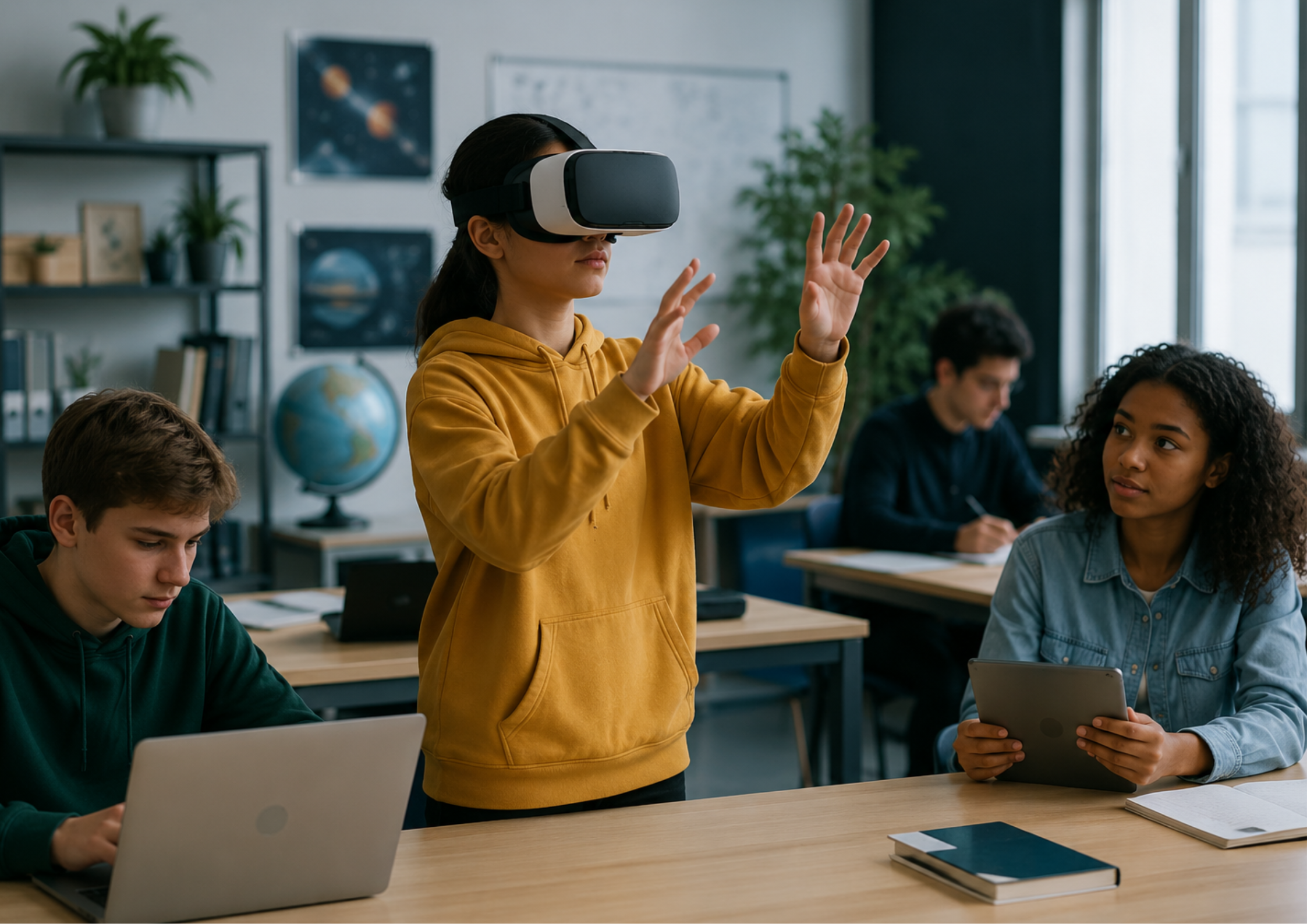
Several elements work together to create an effective immersive educational experience.
Interactive Technology
Technology plays a major role in creating engaging learning environments. Schools may use:
- Virtual Reality (VR)
- Augmented Reality (AR)
- Interactive smart boards
- Educational applications
- Digital simulations
These tools allow students to experience concepts in dynamic ways.
Hands-On Activities
Practical learning experiences encourage students to apply theoretical knowledge. Activities may include:
- Science experiments
- Creative projects
- Role-playing exercises
- Problem-solving challenges
- Group assignments
Hands-on experiences help reinforce learning outcomes.
Real-World Context
Learning becomes more meaningful when students can connect concepts to real-life situations. Educators often incorporate case studies, simulations, and project-based learning to bridge this gap.
How Immersive Learning Works
This educational approach focuses on active participation rather than passive observation.
The process typically involves:
Exploration
Students are introduced to a learning environment where they can investigate concepts independently.
Interaction
Learners engage directly with content through simulations, activities, or collaborative tasks.
Reflection
Students analyze their experiences and identify key lessons learned.
Application
Knowledge is applied to solve problems or complete practical tasks.
This cycle helps deepen understanding and improve long-term retention.
Benefits of Immersive Learning for Students
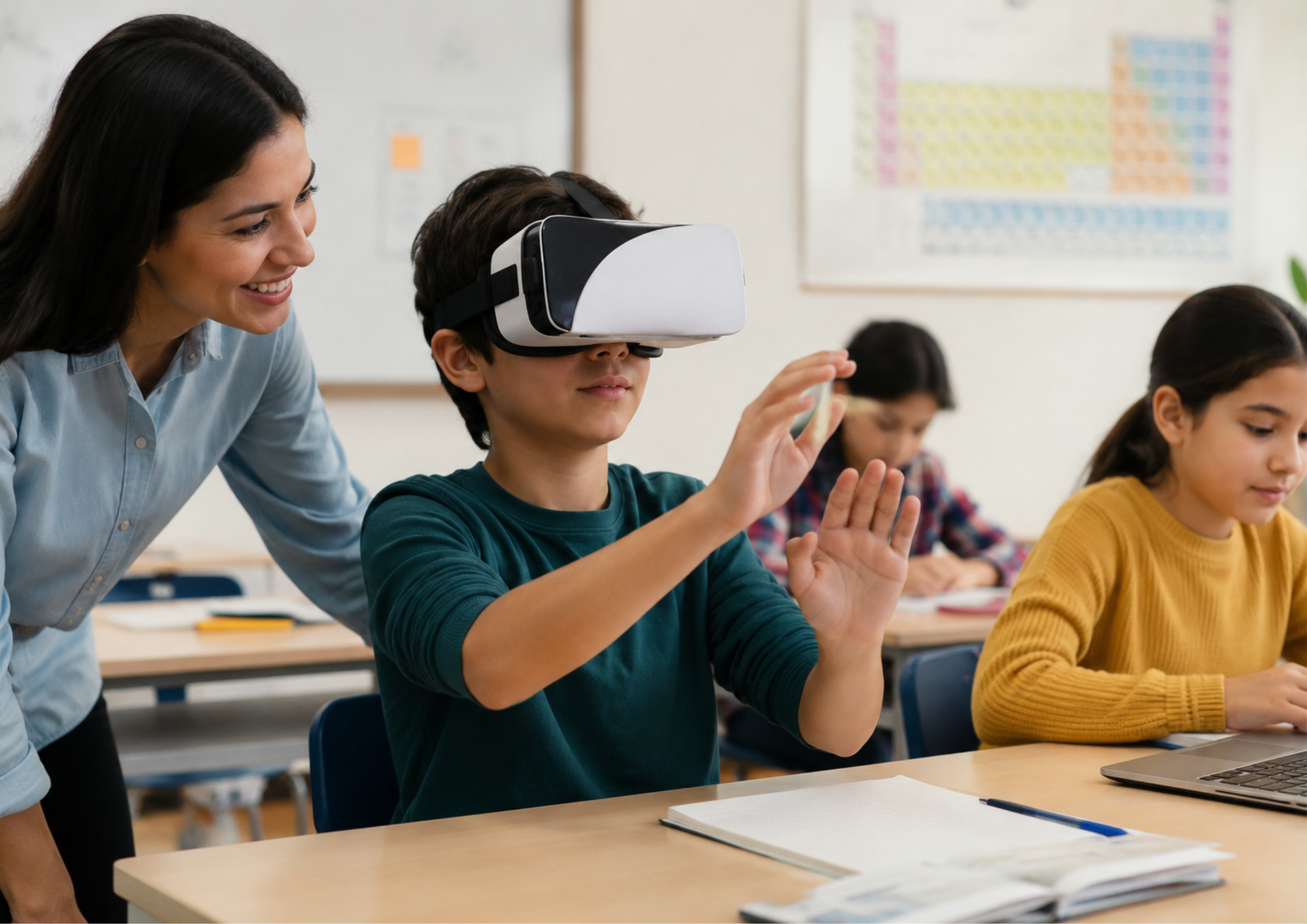
Students often respond positively to engaging educational experiences because they feel more involved in the learning process.
Better Engagement
Interactive environments capture attention more effectively than traditional lectures.
Improved Retention
Research consistently shows that active participation helps learners remember information longer.
Development of Critical Thinking
Students are encouraged to analyze situations, evaluate options, and make decisions.
Increased Confidence
Practical experiences help learners gain confidence in applying knowledge.
Personalized Learning Experiences
Many immersive tools adapt to individual learning styles and progress levels, creating a more customized educational journey.
Benefits for Teachers and Schools
Educators and institutions also gain significant advantages from adopting innovative teaching methods.
Enhanced Classroom Participation
Students become more willing to contribute and engage in discussions.
Improved Learning Outcomes
Interactive experiences often lead to stronger academic performance.
Greater Collaboration
Group activities encourage teamwork and communication skills.
Future-Ready Education
Schools can better prepare students for higher education and professional careers.
These benefits contribute to a more effective and dynamic learning environment.
Technologies Driving Immersive Learning
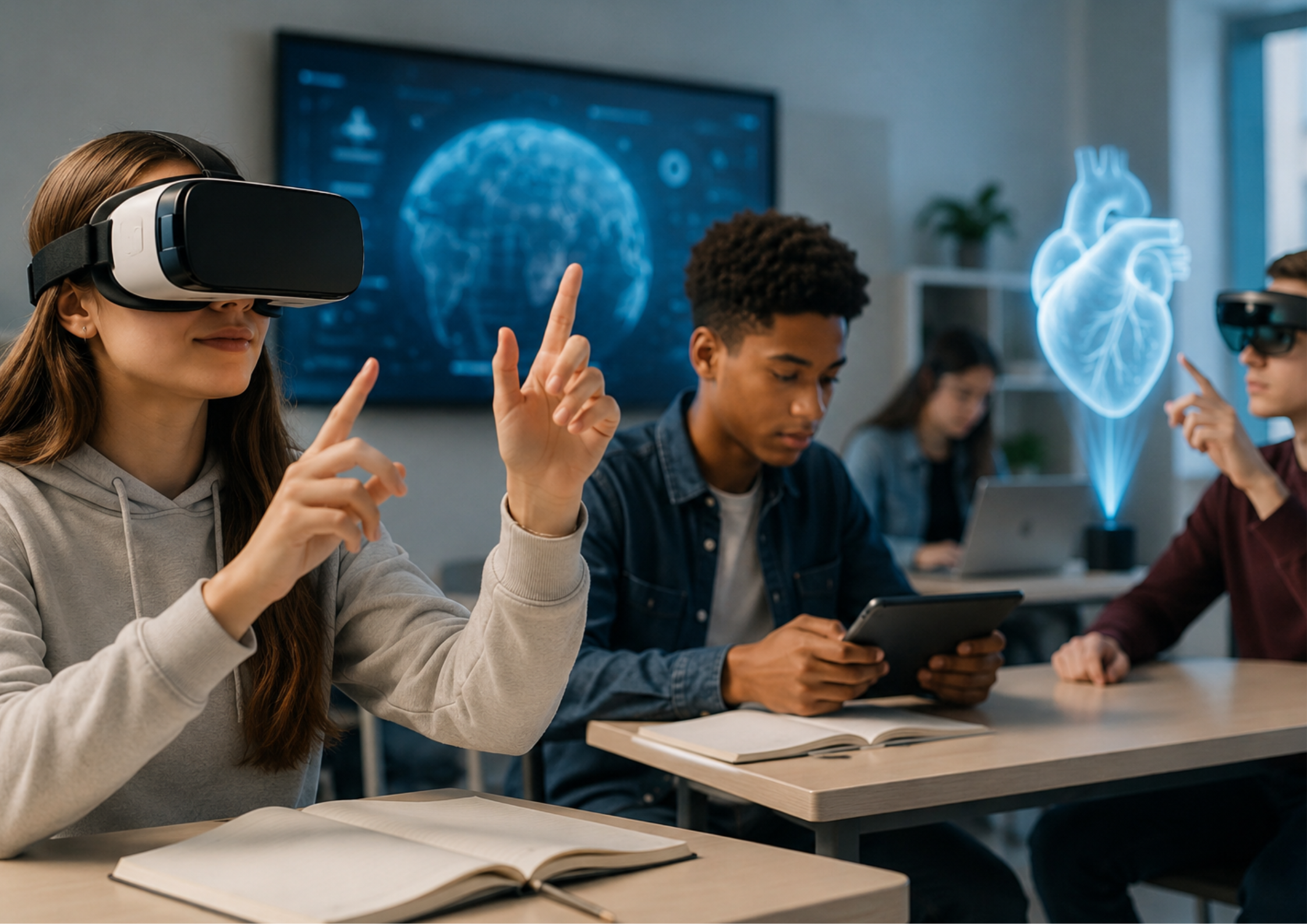
Modern technology has accelerated the adoption of immersive educational practices.
Virtual Reality (VR)
VR creates fully digital environments where students can explore concepts in three-dimensional spaces.
Examples include:
- Virtual science laboratories
- Historical site explorations
- Medical training simulations
Augmented Reality (AR)
AR overlays digital information onto the physical world, enhancing learning experiences without replacing reality.
Artificial Intelligence
AI-powered platforms can personalize content and provide immediate feedback to learners.
Gamification
Educational games introduce rewards, challenges, and progression systems that motivate students to participate actively.
Immersive Learning Across Different Subjects
This approach can be applied to nearly every area of education.
Science
Students can conduct virtual experiments and explore complex scientific concepts safely.
Mathematics
Interactive simulations help visualize abstract mathematical principles.
History
Virtual tours and historical recreations make past events more engaging.
Geography
Students can explore global locations without leaving the classroom.
Language Learning
Interactive conversations and simulations improve communication skills and cultural understanding.
Challenges of Implementing Immersive Learning
While the benefits are substantial, schools may face certain challenges.
Technology Costs
Advanced tools and software can require significant investment.
Teacher Training
Educators need adequate training to effectively use new technologies.
Infrastructure Requirements
Reliable internet connectivity and modern devices are often necessary.
Accessibility Concerns
Schools must ensure all students have equal access to learning opportunities.
Addressing these challenges is essential for successful implementation.
The Future of Immersive Learning

As technology continues to advance, educational experiences are expected to become even more interactive and personalized.
Future developments may include:
- AI-powered virtual tutors
- Highly realistic virtual classrooms
- Advanced mixed reality experiences
- Personalized learning pathways
- Global collaborative learning environments
These innovations have the potential to reshape how students learn and interact with educational content.
How Schools Can Successfully Adopt Immersive Learning
Educational institutions can take several practical steps:
Start with Clear Objectives
Define learning goals before selecting technology.
Invest in Teacher Development
Provide training and ongoing support for educators.
Focus on Student Needs
Choose solutions that enhance learning outcomes rather than simply adding technology.
Measure Results
Regularly evaluate engagement, performance, and overall effectiveness.
A strategic approach helps maximize the benefits while minimizing implementation challenges.
Conclusion
The future of education is becoming increasingly interactive, engaging, and student-centered. Immersive Learning offers a powerful way to transform traditional teaching into meaningful experiences that promote deeper understanding, stronger retention, and practical skill development. As schools continue embracing innovation in 2026, this approach is expected to play a vital role in preparing students for academic success and the demands of a rapidly evolving world.
FAQs
Q1. What is immersive learning in education?
Ans: Immersive learning is a teaching approach that actively engages students through interactive experiences, simulations, technology, and hands-on activities to improve understanding and retention.
Q2. How does immersive learning benefit students?
Ans: It helps students stay engaged, develop critical thinking skills, improve knowledge retention, and apply concepts in real-world situations more effectively.
Q3. What technologies are used in immersive learning?
Ans: Common technologies include Virtual Reality (VR), Augmented Reality (AR), Artificial Intelligence (AI), interactive simulations, and educational gaming platforms.
Q4. Can immersive learning be used for all subjects?
Ans: Yes. Immersive learning can be applied to subjects such as science, mathematics, history, geography, languages, and even vocational training.
Q5. Is immersive learning the future of education?
Ans: Many educators believe immersive learning will play a major role in the future of education because it creates engaging, personalized, and practical learning experiences for students.