


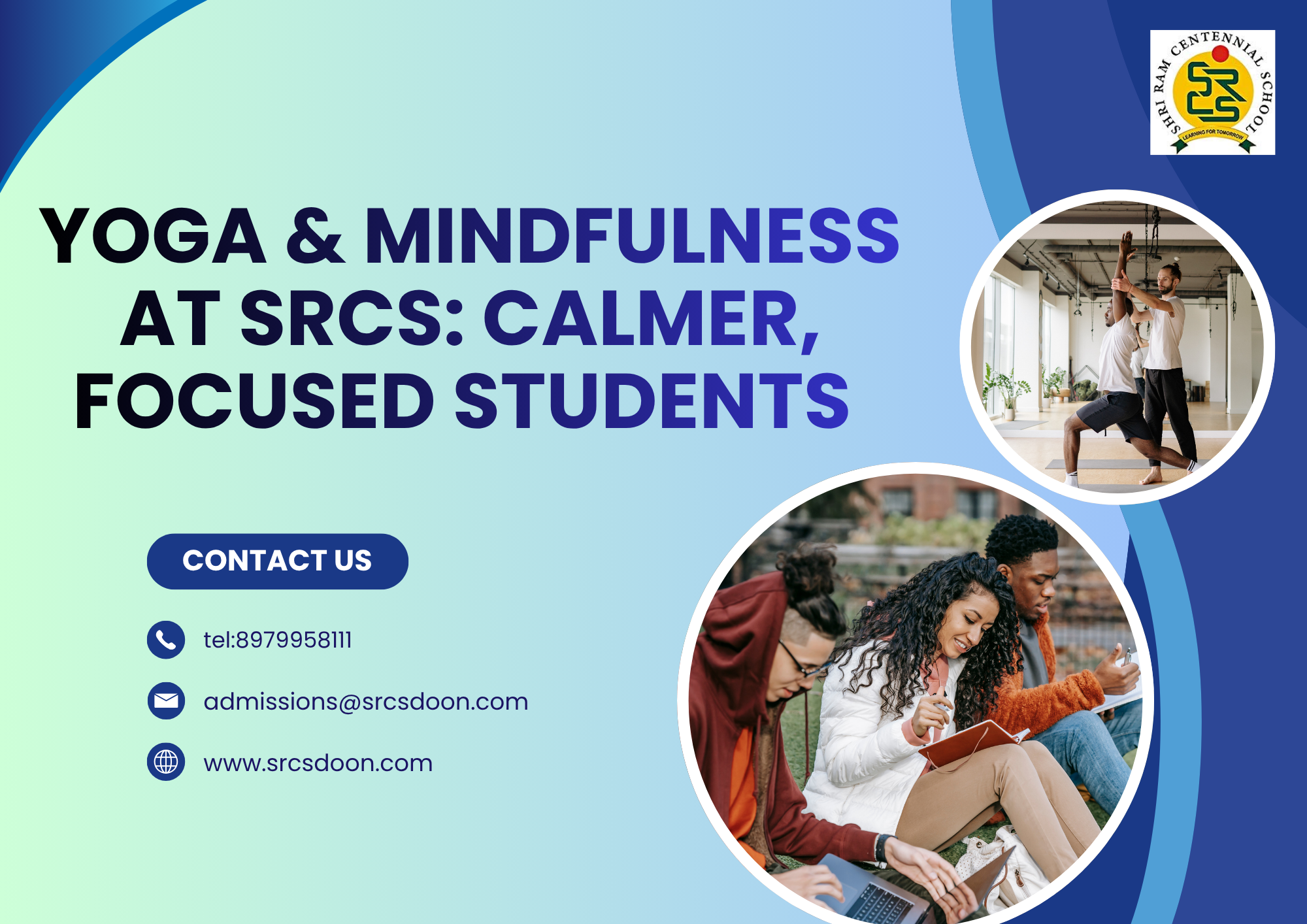
This is the modern world and pupils have to deal with numerous challenges such as their strain on learning, cramming, social issues, electronic gadgets etc. This can sometimes make it challenging for children to be calm, focused and emotionally regulated. That’s where Yoga and Mindfulness in schools can be of great help to students’ overall well-being.
Incorporating yoga and mindfulness into an all-encompassing learning and development plan for students at SRCS can encourage students to become more aware of their thinking, feeling and physical sensations. These are not just relaxation exercises, but can also help to develop the ability to focus, concentrate, practise self-control, emotional stability and a positive attitude towards life’s challenges.
Why Yoga and Mindfulness Matter for Students
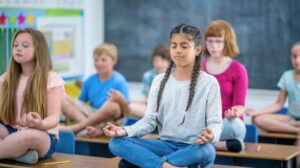
In the School, Life is learning, socializing, activities and responsibilities. These experiences are necessary for development but can at the same time be distracting, overwhelming and/or overwhelming to the student. They will be able to introduce them to some simple yoga and mindfulness practices so they can STOP, BREATHE and connect with themselves.
Minding means that the students become attuned to what they are thinking and feeling in the moment but they don’t automatically react to what they’re feeling. The class will be a mix of yoga and breathing/awareness in order to broaden the student’s knowledge of himself and his emotions.
All these are aspects that can contribute to a healthy and balanced school life together.
Improving Focus and Concentration
There are several positive elements of mindfulness practices which assist pupils to be present. Students can be distracted by various thoughts, discussions or outside influences in the classroom setting. Simple breathing exercises and mindfulness activities can be performed to help learners to settle and focus their mind before embarking on a task.
A few moments of mindfulness during the school day can help to transition a pupil from one activity to the next and also to help pupils focus on learning at SRCS. These practices can help students to over time become aware of what they are distracted by, and bring them back to the task at hand.
Supporting Emotional Well-Being
Children have a variety of feelings throughout their development. May be excited, nervous, disappointed, frustrated or anxious. As part of the process, understanding and controlling them are all components of personal development.
Mindfulness can facilitate students’ awareness of the emotions in their minds without doing anything impulsively. Yoga and breathing exercise can also provide one with an opportunity to slow down and relax as a student.
The SRCS can help develop emotional awareness to assist students in responding in a healthier way to the challenges they encounter in their daily lives. This can help to create confidence and emotional strength.
Encouraging Physical Well-Being
Yoga is an introduction to students to gentle physical activity, stretching, postures and breathing exercises. These are exercises that can be used to enhance body awareness, flexibility, balance and healthy movement.
Yoga that is at a suitable level for students can also provide a positive means of filling in the long sitting time. When practiced in conjunction with a healthy lifestyle and exercise, yoga can make a contribution to a well balanced life.
It’s important to encourage students to have fun with movement and to realize the relationship between physical and emotional health, rather than make yoga a competitive experience.
Developing Self-Discipline

Patience and consistency is key to Yoga and Mindfulness. Children are made aware that things take time to develop a skill and that something doesn’t just happen overnight.
Which is a thinking attitude that you can take into your yoga classes. Pupils may start to appreciate the importance of being patient, having control and perseverance in their learning and life.
Such attributes can be used in conjunction with classroom work, to enable students to tackle problems with more resolve and persistence at SRCS.
How to develop a more peaceful learning place.
Placating and well-prepared students can be aided by a calm learning environment. Shorter mindfulness sessions, breathing exercises or quiet reflection time can be used to help students to reset the day when it is busy.
Age appropriate mindfulness activities can be incorporated at the beginning of lessons, and/or at the end of lessons or transitions between lessons. It is important to have students calm and focused, which can be achieved with deep breathing or quiet reflection for a few minutes.
The following practices can contribute to bringing about the values of tranquillity, respect and self-awareness in the school.
Building Positive Relationships
Mindfulness isn’t a health thing. It can also assist pupils to be more aware of the impact of their actions on others. Learners are likely to be more emotionally aware which can assist in listening and responding appropriately, and in communicating effectively.
The Yoga & mindfulness activities can also be used in group sessions, with students being able to practise with each other. These experiences can help to build a sense of community, respect and collaboration.

Students will gain the skills to handle stress, stay focused, recognize their feelings and adjust to change during their life. The skills can be valuable to learners in all aspects of their education, higher education, workplace and relationships.
SRCS can teach yoga and Mindfulness to students in a way that will enable them to learn how to apply these skills to real-life situations when they are faced with a challenging situation. To develop the students’ self-awareness, balance and resilience to life challenges.
Conclusion
Yoga and mindfulness education in schools can be a tool to help the children’s physical, emotional and mental well-being, as it can contribute to a more holistic education. These practices can assist learners to develop focus, self awareness, emotional resilience, self discipline and healthier practices at SRCS. Whereas, providing children with opportunities to pause, breathe, move and reflect is another way that schools can help to foster a calm, more ready-to-learn environment.
Frequently Asked Questions.
Q1. What are the advantages of yoga and mindfulness in a school?
Ans. Through yoga and mindfulness, students can develop the ability to focus and concentrate, be aware of themselves, manage their emotions, and gain better control of themselves as well as their physical and mental health.
Q2. How can yoga assist pupils with stress?
Ans. Yoga integrates exercises, breathing and relaxation strategies that can help students slow down, relax and learn healthier coping strategies for everyday academic and social stressors.
Q3. What are the benefits of using mindfulness for students’ concentration?
Ans. Mindfulness promotes students’ focus on now. Practice can make learners more aware of distracting factors and focus again on the task they are doing.
Q4. What is SRCS’ role in supporting students through yoga and mindfulness?
Ans. SRCS can incorporate age-appropriate student development programmes that include yoga, breathing and mindfulness, to promote emotional balance, calmness, attention, self-discipline and positive attitudes.