



The classroom provides more support, and on the contrary, academic challenges or social and relational issues, even self expectation can bring about stresses. Students can consequently develop depression, anxiety or social discomfort, loneliness and /or emotional concerns. These can hugely affect the level of Supporting Student Mental Health as whole in creating the learning space desired for it is supportive, loving, respected and focused.
Through attention the academic and emotional development should have a holistic and integrated strategy for the social well-being.
Students then feel that the will of the adults support and allow the development of confidence and leadership while enhancing the development of personal skills for education. Students are most likely to take an effective part in their learning and will establish healthy relationships with all of their peers including staff; they can feel respected , supported ,listened to and be confident .
Supporting Student mental health: why it matters
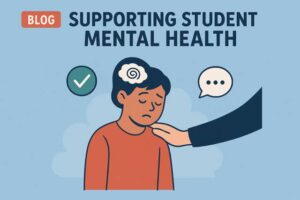
why mental health for pupils should be focused A person’s mental health can affect how they go about talking, socialising, communicating or the interaction with other people in the school. Those having mental health disorders cannot be able to concentrate, nor attend events or complete assigned work, as well the child may not be having great interaction skills, as social connection is a way of mental strength. Pupils are susceptible to experiences of stress for the reason they are subjected to exams, friend matters, family concerns, self esteem and concerns pertaining to life after studies.
Positive atmosphere in school will enable pupils know the sentiments inside themselves and therefore are more comfortable seeking guidance when there is need.
Inviting students to discuss their problems can alleviate worry or fear related to accepting help.
Creating a Safe and Supportive Environment
You don’t leave your home without dressing properly even before you meet school. The School is part of pupils’ learning process, hence needs to be a nurturing one wherein every child feel a part of the community. School culture impacts a child’s feelings of safety as well as general well-being and also contributes to the environment in the learning environment.
Lowering of values and also respect towards individual learners might make it difficult students feel confident enough, or comfortable to verbalise concerns, or engage in a safe manner.
The Role of Teachers
The ability of pupils to discuss their emotions with teachers they know will listen may inspire them to discuss what problems they face at time because teachers encourage them to share their concerns with extra attention.
The staff are significant players the most vital are educators teachers who spend sufficient time with pupils, are best equipped to be able to identify a pupil which undergoes changes in behaviour engagement and achievement, and where unusual behavioural outcomes of a student who lacks interest for any subject matter and withdrawing with stress needs to be seen to and identified accordingly.
Although we are unaware, teachers’ awareness regarding specific mental health education could assist us in referral processes to the appropriate avenues when necessary and although they may not be professionals, they are a valuable tool in the chain of identifying needs.
Teachers at SRCS work hard to positively influence student mental health by creating a positive and supportive in class culture by identifying needs, being attentive towards individual students.
Encouraging Open Communication
Encourage openness- few pupils engage themselves as much as they need, the way with ease some will express their emotions and opinions.
Let learners accept that it is normal to feel stressed, or worried and disappointed.
At correct stages educating the child about his/her mental health can inspire the pupils and make learning become better for they become aware of their own emotions.
Building Emotional Resilience

It involves coping or adapting with the challenge and being bounced from difficult circumstances. Helping our kids build emotional fitness in any of the SRCS’ schools, challenges that appear to arise from time to time such as a test they find hard or a new venture they try and which doesn’t work well , or one student does not make sure their voice could possibly be heard within the groups they participate; all of those moments may indeed have to be seen as opportunity for a child to develop to develop a healthy state that includes seeking aid from an adult who might support.
It should not necessarily be a part of putting challenges just around student to develop endurance, It is about teaching methods which are good in to cope with any circumstance(s) including appropriate ways and health related coping methods.
Education of balancing health with academics
It is important that youngsters take breaks to go outside, and/or play, engage in creative practices, connect with buddies and even take part in other pastimes and past times, as this can foster overall well-being.
Providing pupils at SRCS sample chances to pursue individual hobbies in a healthy way is integral; opportunities such as participating in sport, musical instruments, art classes or a number of different club activities will not only improve a student’s confidence levels, they may well discover new skills and develop deeper friendships.
The Importance of Positive Peer Relationships
A holistic education experience may also play a part for pupils to develop holistic, and physical.
Emotional and personal skills such as social competence, cooperation, respect and empathy as many friendships would be formed through collaborative sports, club, and group tasks. Pupils must be aware of importance to voice concerns over anything, and report any problem they may witness and not be afraid to tell. All are supposed to be respected at any aspect within school, and an encouraging tone set at all times!
Work with Parents and Families
It IS vital that we share responsibility in helping students feel their needs should continue to be attended; Parents, caregivers in consultation with teaching staff can effectively make certain pupil needs will be properly addressed and this collaboration greatly enables the recognition of difficulties in behaviour and/ or routine that occur and allow us to implement an effective intervention.
It is indeed invaluable to develop a good parent – teacher partnership and dialogue can only be gained through clear and early identification of issues.
Conclusion
Student Mental Health Is an Essence to Success to quality education! Any such environment a student could be diagnosed with some difficulty must allow for caring environments, supportive teachers , good peer-peer relations, as much time for fun, coaching & co-operation for and amongst parents-families and schools. Only in this all the pupil’s will benefit from holistic personal, academic, emotional and physical progress; and feel confident & loved through support from all that are around them .
A good school system such as that at SRCS can truly inspire its pupils towards a healthy life!
Frequently Asked Questions.
Q1. Why is it important for students to receive mental health support?
Ans. Mental health support assists students in coping with school-related stress, social needs, anxiety, stress and emotional issues to ensure they have a more healthy and supportive school environment.
Q2. How can schools help children & young people’s mental health?
Ans. The following strategies will help support students in school: Establish a safe environment; encourage open communication; foster positive relationships; offer guidance as needed; assist students to access professional support as necessary.
Q3. What steps does SRCS take to support students’ mental health?
Ans. SRCS strives to provide students with a supportive and respectful learning environment that will allow them to feel supported, emotionally resilient, feel like part of a healthy family and learn how to effectively manage challenges.
Q4. What are some factors that can have a negative impact on student mental health?
Ans. Academic pressure, social relationship, family conditions, isolation, self-expectation, bullying, and significant life changes can be factors affecting a student’s emotional and mental state.