





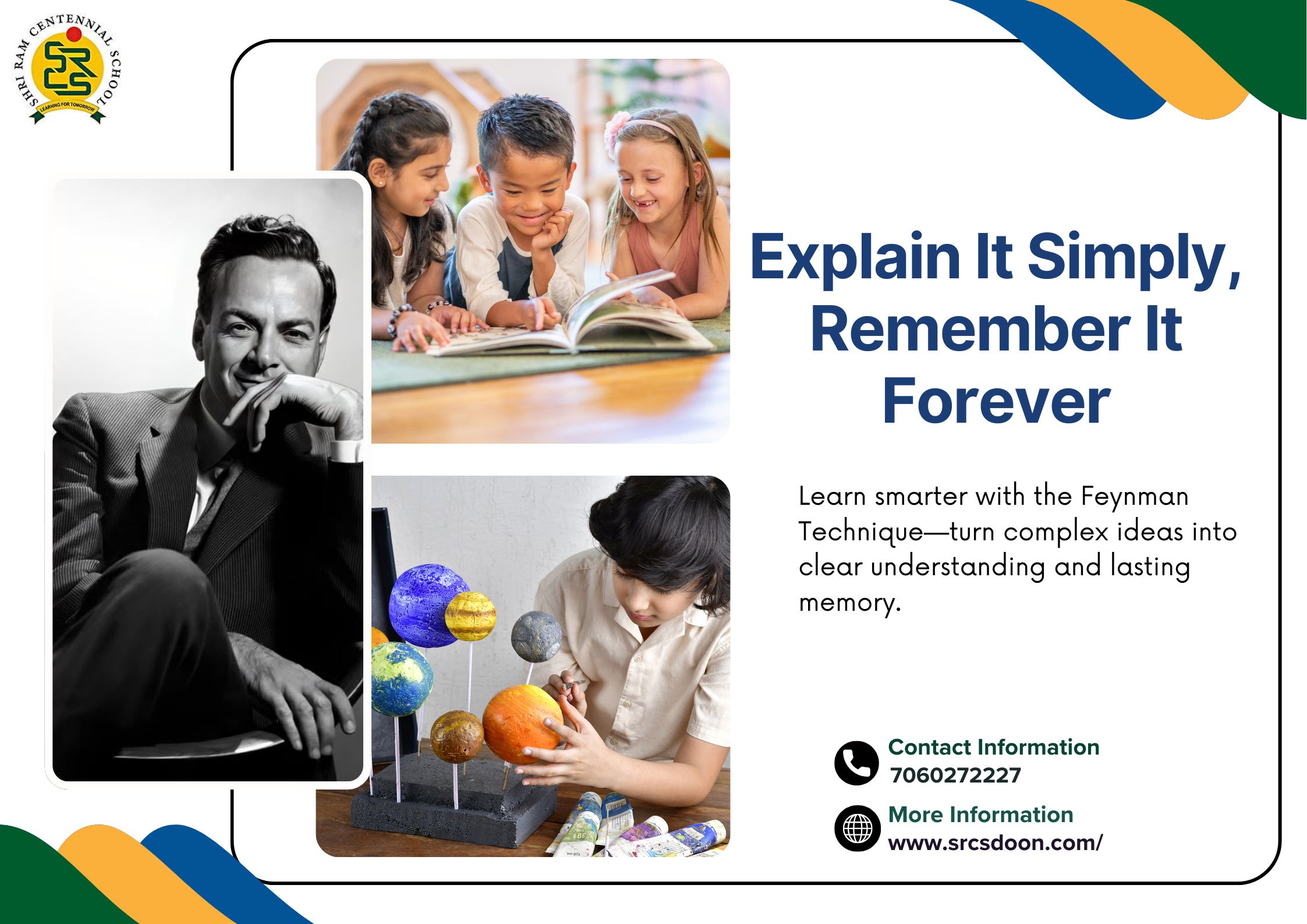
Learning something deeply can feel overwhelming, especially when you’re juggling formulas, definitions, and tons of theory. But what if there was a way to cut through the noise, really own your understanding—and even enjoy the process? Enter the Feynman Technique, a time-tested and powerful method that makes complex ideas simple, memory stronger, and learning truly effective. In this post, you’ll discover what the Feynman Technique is, why it works, how to use it, and how it stacks up against other effective study techniques.
Who Was Richard Feynman?

Richard Phillips Feynman (1918–1988) was far more than a Nobel Prize–winning physicist. He was a curious explorer of life itself. Famous for his groundbreaking work in quantum electrodynamics and particle physics, he also became legendary for his ability to explain the most complicated scientific ideas in clear, everyday language.
Feynman believed that if you couldn’t explain a concept simply, you didn’t actually understand it. His teaching style was lively, playful, and full of analogies that made even difficult physics accessible to beginners. Over time, students and educators distilled his approach into what we now call the Feynman learning technique or Feynman memory technique—a method that turns passive learning into active discovery.
What Exactly Is the Feynman Technique?
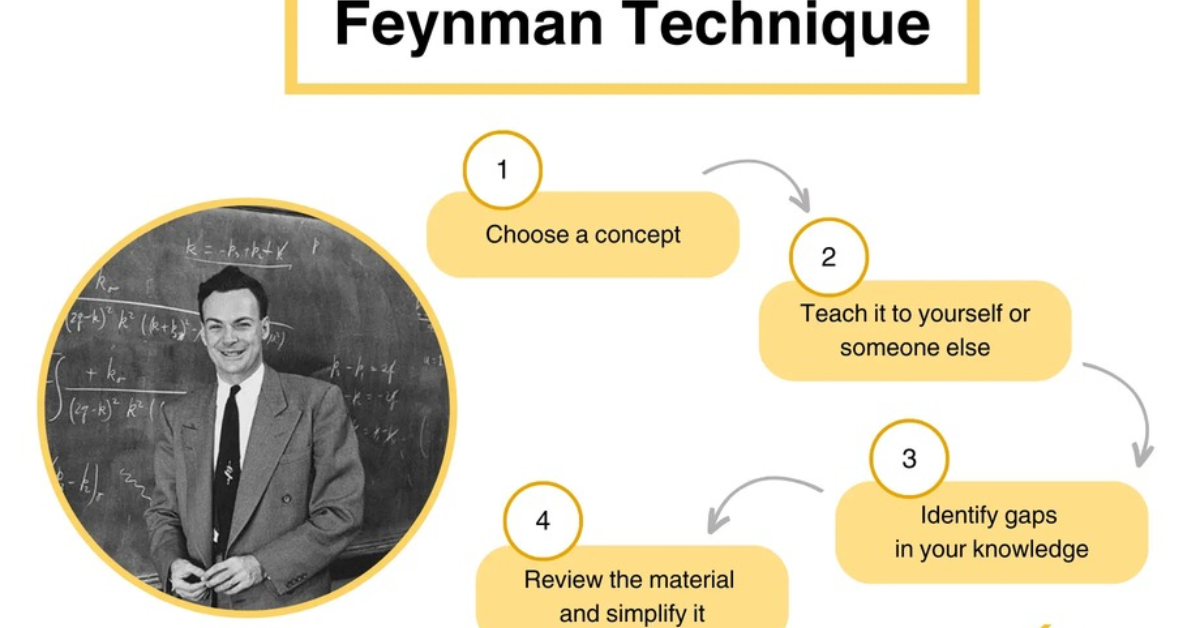
The Feynman Technique is a four-step process designed to help anyone—not just students—learn better, remember more, and apply what they learn. It’s built around the idea that teaching is one of the best ways to truly understand.
-
Choose a Concept — Pick something you’re studying or want to master (a theory, a process, a subject).
-
Teach It to Someone Else — Explain it in simple words, as if teaching a friend who knows nothing about it.
-
Identify Gaps in Understanding — While teaching, you’ll hit points you can’t explain well. Those are your weak spots.
-
Review & Simplify — Go back, learn more, then try teaching again in even simpler terms. Use analogies, diagrams, or stories.
Why the Feynman Technique Works
-
It forces active learning, not passive reading or rote memorization.
-
It makes you confront what you don’t know, which is often hidden when you think you already understand.
-
It improves memory because you’re building your own version of the knowledge (not just copying someone else’s).
-
It helps build confidence—when you can explain something clearly, you own it.
Benefits of the Feynman Technique for Students
-
Active Learning Over Rote Memorization
Traditional memorization focuses on repetition. The Feynman Technique requires you to process ideas deeply, which improves both understanding and recall. -
Identifies Weak Spots Instantly
As soon as you struggle to explain something, you know exactly where to revisit your notes. -
Works Across Every Subject
From physics and mathematics to history and literature, this method adapts seamlessly. -
Improves Communication Skills
By practicing how to explain clearly, you build valuable skills for presentations, interviews, and teaching others. -
Boosts Long-Term Retention
Because you simplify and re-teach, the knowledge sticks far longer than through passive reading.
How to Apply the Feynman Technique in Your Study Routine
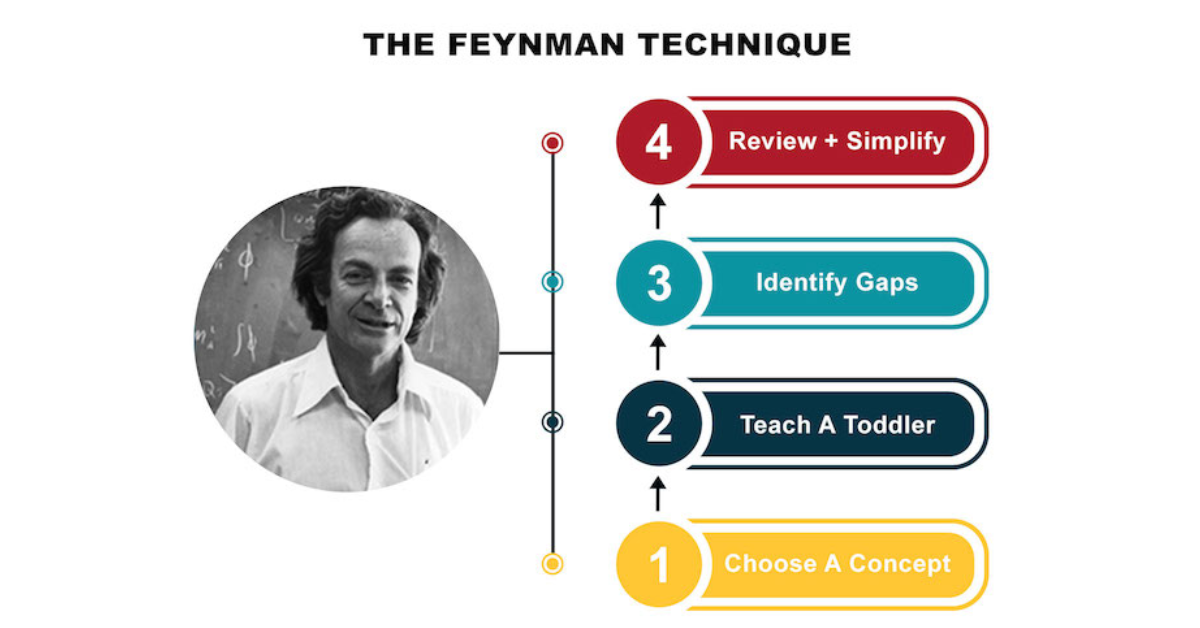
Step 1: Pick Today’s Topic
Choose a single concept—perhaps a tricky formula or a key historical event. The more focused the topic, the easier it is to master.
Step 2: Teach Out Loud
Explain it as if you’re teaching a younger sibling. Speak or write in plain language. If you stumble or use complex jargon, highlight that section.
Step 3: Find and Fill Gaps
Revisit your notes or textbooks to strengthen the areas where you hesitated.
Step 4: Simplify and Use Analogies
Return to your explanation and refine it. Use everyday comparisons—a water tap for pressure, a traffic jam for network congestion. Diagrams or flowcharts help too.
Step 5: Repeat
Each cycle deepens understanding. Over time, you’ll be able to explain the concept effortlessly and from memory.
Feynman Technique vs Other Study Methods
| Method | What It Focuses On | Strengths | Where It Weaknesses Hit |
|---|---|---|---|
| Rote Memorization | Repetition of facts | Quick recall | Doesn’t build deep understanding; forgettable |
| Pomodoro Technique | Time management (study intervals) | Helps avoid fatigue | Doesn’t guarantee understanding by itself |
| Mind Mapping | Organizing knowledge visually | Great for seeing connections | Might lack clarity without explaining |
| Feynman Technique | Teaching to understand | Builds clarity, identifies gaps, boosts recall | Takes more mental effort; first few tries feel awkward |
So the Feynman Technique isn’t a replacement—it’s a powerful complement to other methods.
Tips to Get the Most Out of the Feynman Technique
-
Record Yourself: Play back your explanation to spot unclear points.
-
Draw or Doodle: Visuals make abstract ideas easier to grasp.
-
Teach a Friend: A real audience forces clarity and keeps you accountable.
-
Don’t Rush: The first round might feel clumsy. Improvement comes with repetition.
-
Mix With Other Methods: Combine with active recall or Pomodoro sessions for maximum results.
Common Challenges and How to Overcome Them

- Feeling Awkward Explaining Aloud:
Start by writing down your explanation first. Reading it aloud will soon feel natural. - Struggling to Simplify:
Use analogies from everyday life. If you can connect a physics concept to making tea, you’re on the right track. - Running Out of Time:
Even five minutes of focused Feynman practice per topic can be powerful. Quality matters more than length.
Conclusion
The Feynman Technique is more than just another study hack—it’s a mindset that transforms how we approach knowledge. By forcing you to explain complex concepts in simple terms, it uncovers gaps, strengthens memory, and builds real understanding. Whether you’re a student tackling tough exams, a professional mastering new skills, or simply a curious learner, the feynman memory technique offers a path to deeper learning and longer-lasting retention.
Instead of passively reading and forgetting, you’ll actively engage with ideas, making them part of your thinking for good. Among all the Effective Study Techniques available today, the Feynman Technique remains one of the most powerful tools for anyone who truly wants to learn how to learn.
Frequently Asked Questions (FAQ’s)
1. What is the difference between Feynman learning technique and rote memorization?
The Feynman learning technique focuses on understanding and being able to explain in simple terms, while rote memorization is about repeating information without really grasping its meaning.
2. How can beginners use the Feynman Technique if they struggle with simplifying topics?
Start small—pick very basic concepts. Use everyday language or analogies. With practice, simplifying becomes easier and more natural over time.
3. Does the Feynman Technique help in remembering facts or details?
Yes—it helps you remember details better because you uncover gaps and reinforce weak areas through teaching and repetition, making recall stronger.
4. Can the Feynman memory technique be used in all subjects?
Absolutely. Whether it’s science, literature, history, or maths, the Feynman Technique applies because it’s about breaking down complexity, not tied to any specific subject.
5. How often should I use the Feynman Technique to improve learning?
Try using it for every major topic or chapter. Doing it consistently—once or twice a week—helps solidify concepts and train your brain toward clearer, deeper learning.




I really like how you highlighted the Feynman Technique as a way to simplify complex topics. I’ve found that when I try to explain a concept to someone else—or even just to myself out loud—it quickly reveals the gaps in my understanding. It turns learning into an active process rather than just memorizing, which makes the knowledge stick much better.