





Mobile phones have become essential for students, offering learning tools and quick access to information, but the real concern is their excessive and uncontrolled use, which leads to mobile addiction. Across classrooms and homes, students spend long hours scrolling, gaming, watching videos, and chatting—affecting their focus, emotions, sleep, and academic performance.
his discussion explains what mobile addiction is, why it develops, how it impacts students, and what practical steps can help them manage it especially in a modern school in India environment—aiming to encourage balanced and responsible use rather than blaming technology itself.
1. What Is Mobile Addiction in Students? (The Clinical View)
Mobile addiction — also called Problematic Smartphone Use (PSU) in clinical literature — is not simply “using the phone a lot.” The distinction matters enormously for parents trying to figure out if their child has a problem.
According to the Smartphone Addiction Scale (SAS), the tool used in most major Indian studies, a student is classified as at-risk when smartphone use:
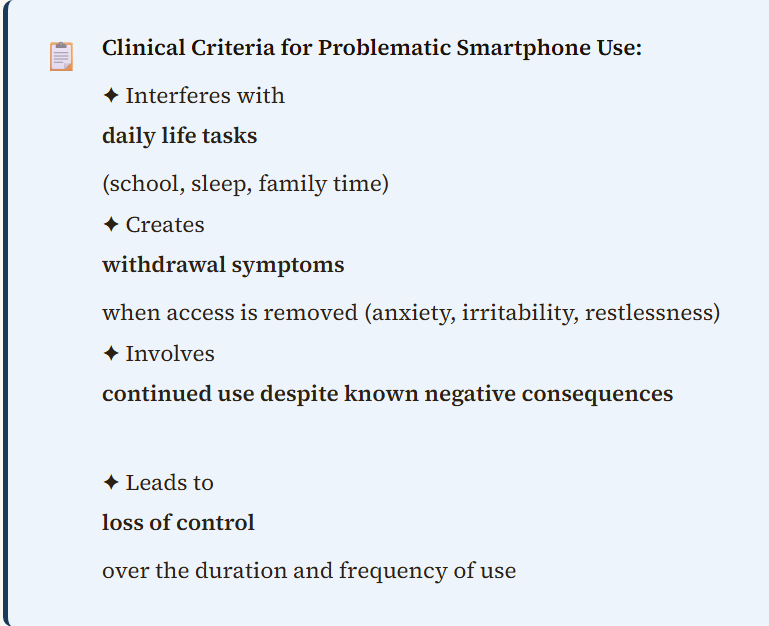
The key difference between “heavy use” and “addiction” is control. A student who uses their phone 4 hours a day but can put it away when needed is in a different category from one who cannot study, sleep, or eat without checking their screen.
How Big Is India’s Mobile Addiction Problem? (2026 Research Data)
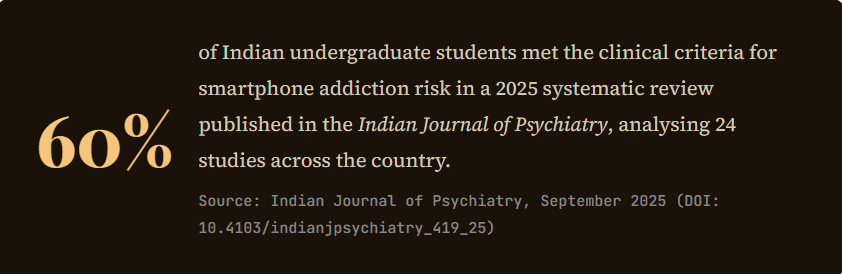
That is not a small number. If your child has a class of 40 students, roughly 24 of them are at risk.
The 2026-27 Economic Survey — India’s most authoritative annual economic document — painted an even starker picture:
- Indians spent 1 lakh crore hours on smartphones in 2024
- Only 57% of children aged 14-16 use phones for education; 76% use them for social media (ASER Report 2024)
- Youth aged 15–24 are identified as the most vulnerable demographic to social media addiction and gaming disorders
- India had approximately 700.58 million smartphone users in 2024 — the second-largest user base globally
Why Students Get Addicted: The Psychology Behind It
Understanding the “why” transforms parents from frustrated enforcers into effective supporters. Mobile addiction is not a character flaw. It is a neurological response to deliberate design.
The Dopamine Loop
Every notification, like, comment, and new video triggers a small release of dopamine — the brain’s pleasure chemical. App designers use variable reward schedules (the same mechanism that makes slot machines addictive) to keep users scrolling. For an adolescent brain — which is neurologically wired to prioritize reward and social belonging — this is an especially powerful trap.
Specific Triggers for Indian Students
| Trigger | How It Works | Common in India? |
|---|---|---|
| Peer pressure & FOMO | Missing group chats means missing social currency | Very High |
| Academic stress escape | Board exam pressure makes short-form videos a relief valve | Very High |
| Unstructured time at home | Long school holidays with no structured activity | High |
| Online classes legacy | COVID-era online schooling blurred academic & entertainment device use | High |
| Algorithmic recommendations | YouTube Shorts, Instagram Reels, and Moj serve endlessly personalized content | Extremely High |
Effects of Mobile Addiction on Students

Understanding the impact is the first step toward finding solutions. Smartphone addiction influences health, studies, and emotional well-being in several ways.
1. Declining Academic Focus
Long screen hours reduce concentration. Students often struggle with:
-
Completing homework on time
-
Paying attention during classes
-
Memorizing concepts
-
Avoiding distractions while studying
Every minute spent switching between apps weakens the brain’s ability to stay focused on one task.
2. Poor Sleep Quality
Blue light and late-night screen time delay sleep. Students who scroll at night wake up tired, irritable, and less productive during the day.
3. Emotional Imbalance
Excessive mobile use can lead to:
-
Anxiety from social media pressure
-
Frustration when unable to access a device
-
Mood swings due to overstimulation
-
Reduced patience and increased irritability
Digital overstimulation affects the mind more than many students realise.
4. Physical Health Issues
Long hours on screens may cause:
-
Eye strain
-
Neck and back pain
-
Headaches
-
Reduced physical activity
These issues, although common, can turn serious if ignored.
5. Weak Social Skills
Students glued to screens often:
-
Avoid real-life conversations
-
Struggle with confidence
-
Prefer virtual interactions
-
Become emotionally detached
Building relationships becomes harder when digital life takes over real life.
Positive Side of Mobile Use: A Balanced View

A symmetrical discussion requires acknowledging the benefits too. Smartphones are not the enemy; mismanagement is. When used carefully, they help:
1. Improve Learning
Educational apps, videos, and online tools make lessons easier to understand.
2. Support Research & Creativity
Students can explore diverse topics, learn skills, and express creativity through photos, videos, coding apps, or digital tools.
3. Enable Smarter Classrooms
Modern learning platforms—including the rise of AI Education—help students personalise learning, track progress, and learn at their own pace.
4. Build Digital Confidence
Tech-savvy students adapt easily to future careers.
5. Encourage Collaboration
Online group discussions and shared documents help students work together smoothly.
The goal is balanced use—not elimination.
Signs That a Student May Have Mobile Addiction

Parents and educators can observe these patterns:
-
Checking the phone repeatedly without reason
-
Getting irritated when the device is taken away
-
Hiding screen activity
-
Spending more time online than offline
-
Neglecting studies, hobbies, or sleep
-
Feeling restless without the phone
-
Using the phone to cope with sadness or boredom
Early detection helps prevent long-term problems.
Solutions: How Students Can Break Mobile Addiction

A structured plan works best. These practical, student-friendly strategies promote healthier digital habits.
1. Set a Daily Screen-Time Limit
Decide how many hours are ideal and stay within that limit. Parents can support by setting device timers.
2. Follow a Study–Break Routine
Use techniques like:
-
40 minutes study
-
10 minutes break
This builds discipline and reduces the urge to check phones constantly.
3. Keep Phones Away While Studying
Placing the phone in another room improves concentration more than students expect.
4. Turn Off Non-Essential Notifications
Most distractions come from unnecessary alerts. Silent mode helps create calm focus.
5. Create Tech-Free Hours
Examples:
-
During meals
-
Before bedtime
-
Early morning
These breaks refresh the mind.
6. Engage in Offline Activities
Sports, reading, music, drawing, or outdoor games reduce dependency on digital entertainment.
7. Communicate About Digital Well-Being
Understanding the problem helps students make conscious choices. Discuss screen time openly without judgement.
8. Use Apps for Self-Control
Ironically, technology can help fix technology overuse. Apps that track screen time help students become aware of daily habits.
9. Prioritize Sleep Hygiene
Switching off screens at least one hour before bedtime improves sleep and reduces restlessness.
10. Seek Guidance When Needed
If addiction becomes severe, mentoring, counselling, or digital detox plans may be necessary.
Role of Parents and Teachers in Building Healthy Digital Habits

Students follow what they see. A consistent, supportive approach works better than strict rules.
Parents Can:
-
Model balanced mobile use
-
Create device-free zones at home
-
Monitor without invading privacy
-
Encourage offline bonding
Teachers Can:
-
Integrate healthy tech practices in class
-
Teach students about digital risks
-
Provide paper-based alternatives sometimes
-
Encourage participation in physical activities
A united effort helps students build lifelong discipline.
Conclusion
Mobile phones are powerful tools capable of shaping learning, communication, and creativity. But when used without limits, they can affect students academically, emotionally, and socially. Mobile addiction in students is a manageable challenge, not a permanent problem. With awareness, structured habits, supportive adults, and conscious use an approach often encouraged in ICSE Boarding schools in India students can enjoy the benefits of technology without losing control over their time and attention.
Balancing online and offline life is the true skill of the modern generation. When students master this balance, they grow smarter, more focused, and better prepared for the future.
Frequently Asked Questions (FAQs)
1. What is mobile addiction in students?
Mobile addiction is when students use their phones excessively, causing distraction, poor focus, and difficulty controlling their screen time.
2. What causes mobile addiction among students?
Factors include entertainment apps, social media pressure, stress relief, and lack of routine or screen-time limits.
3. How does mobile addiction affect academics?
It reduces concentration, delays homework, disrupts sleep, and lowers overall academic performance.
4. How can students reduce mobile addiction?
By setting screen-time limits, turning off notifications, keeping phones away while studying, and engaging in offline activities.
5. Can parents and teachers help manage mobile addiction?
Yes, by guiding healthy digital habits, setting boundaries, and encouraging balanced online and offline activities.