





Education has always tried to answer one simple question: How do students learn best? Over time, different theories have offered different explanations. One of the most influential among them is Behaviorist Learning Theory, which focuses on observable actions rather than internal thoughts or emotions.
From classroom reward charts to workplace training programs, behaviorism continues to shape teaching practices around the world. This blog explores its core principles, practical examples, real-life applications, benefits, and limitations—helping students, parents, and educators understand its relevance in today’s learning environment.
Table of Contents
ToggleIntroduction to Behaviorist Learning Theory
Behaviorist learning theory emerged in the early 20th century with the belief that learning is a change in behavior caused by external stimuli. According to this perspective, what happens inside the mind is less important than what can be observed and measured.
Two key psychologists played a significant role in shaping this theory:
-
John B. Watson – Often called the founder of behaviorism, he argued that psychology should study observable behavior.
-
B. F. Skinner – Known for his work on operant conditioning and reinforcement.
Their work established the idea that learning occurs through interaction with the environment, where behavior is shaped by rewards and consequences.
Core Principles of Behaviorist Learning Theory
Behaviorism is built on structured and measurable principles. Let’s look at the foundational elements.
1. Stimulus and Response
At the heart of behaviorism lies the connection between a stimulus (an event or trigger) and a response (a behavior). When a teacher asks a question (stimulus), a student answers (response). If the answer is praised, the behavior is likely to repeat.
2. Reinforcement
Reinforcement strengthens behavior. It can be:
-
Positive Reinforcement: Adding a reward to encourage behavior (e.g., praise, certificates).
-
Negative Reinforcement: Removing something unpleasant to encourage behavior (e.g., no extra homework for timely submission).
3. Punishment
Punishment reduces unwanted behavior. This may involve consequences such as warnings or loss of privileges. However, modern education systems recommend careful use of punishment to avoid harming motivation.
4. Repetition and Practice
Behaviorists believe that repetition builds habits. Drill-based learning, memorization exercises, and structured practice follow this principle.
Classical and Operant Conditioning

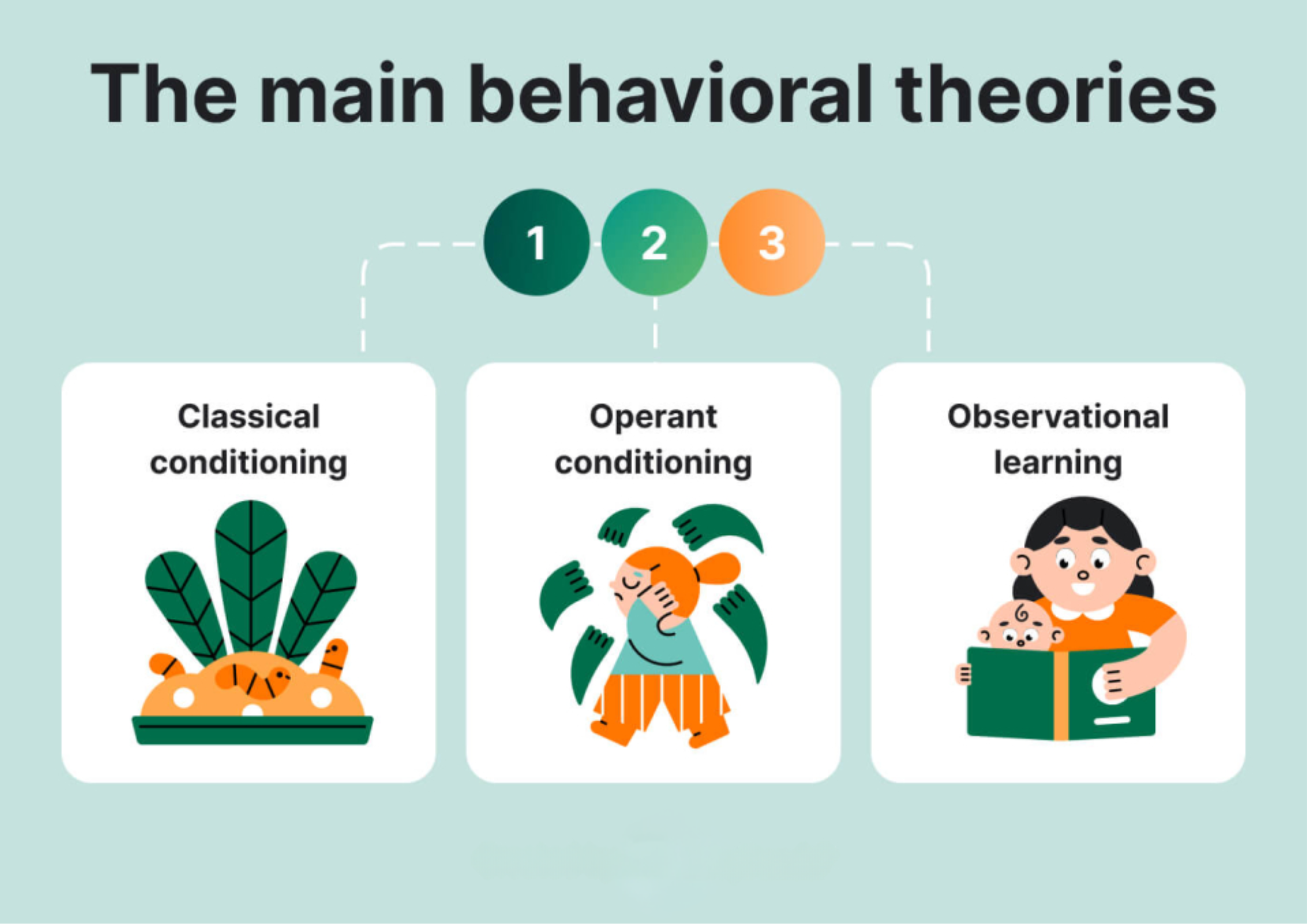
Behaviorism is often explained through two types of conditioning:
Classical Conditioning
Developed by Ivan Pavlov, classical conditioning explains how a neutral stimulus becomes associated with a response. In simple terms, learning happens through association.
For example, if a student repeatedly experiences encouragement during group work, they may begin to associate teamwork with positive feelings.
Operant Conditioning
Introduced by B. F. Skinner, operant conditioning focuses on how consequences shape voluntary behavior. If a student receives recognition for completing assignments on time, they are more likely to repeat that behavior.
This method is widely used in classrooms, training programs, and even parenting strategies.
Examples of Behaviorism in Everyday Learning

Behaviorist principles are not limited to psychology textbooks. They are present in everyday educational settings.
In the Classroom
-
Reward charts for younger children
-
Star systems for homework completion
-
Structured test preparation sessions
-
Clear rules with consistent consequences
A well-structured classroom often relies on predictable reinforcement systems.
In Schools and Institutions
In many educational environments, including a reputed school in Dehradun, teachers may use structured discipline policies and reward-based motivation systems to maintain order and encourage academic consistency.
At Home
Parents often use behaviorist techniques without realizing it:
-
Allowing screen time after homework
-
Praising good manners
-
Setting consistent bedtime rules
These small actions shape long-term habits.
Applications in Modern Education

Behaviorist learning theory continues to influence educational systems across different levels.
1. Classroom Management
Clear expectations and consistent reinforcement help maintain discipline. Students understand boundaries and develop responsibility.
2. Skill-Based Learning
Subjects like mathematics, language learning, and music often benefit from repetition and structured drills.
3. Special Education
Behavior-based interventions are widely used to support children with learning challenges. Structured reinforcement helps improve attention, social behavior, and task completion.
4. Online Learning Platforms
Many digital platforms use badges, points, and progress bars. These are modern forms of reinforcement that keep learners engaged.
Benefits of Behaviorist Learning Theory

Like any educational approach, behaviorism has its strengths.
1. Clear Structure
Students know what is expected and what rewards or consequences follow. This clarity reduces confusion.
2. Measurable Outcomes
Since behavior is observable, progress can be tracked easily. Teachers can assess improvements through visible actions.
3. Effective for Foundational Skills
Basic skills such as reading fluency, arithmetic calculations, and language vocabulary often require repetition, which behaviorism supports effectively.
4. Builds Discipline
Consistency in reinforcement helps students develop responsibility and routine.
Challenges and Criticisms

While behaviorism has proven effective in many areas, it is not without limitations.
1. Limited Focus on Internal Thinking
Critics argue that behaviorism overlooks emotions, creativity, and independent thinking. Learning is more than just observable behavior.
2. Overdependence on Rewards
Excessive reliance on external rewards may reduce intrinsic motivation. Students might work only for praise rather than genuine interest.
3. Less Emphasis on Critical Thinking
Behaviorist methods focus on correct responses, which may not encourage deep analysis or problem-solving skills.
4. Risk of Rigid Learning
Highly structured systems may not suit every learner, especially those who thrive in flexible or creative environments.
Behaviorism in Comparison to Other Theories
Education today blends multiple approaches. While behaviorism emphasizes observable actions, cognitive theories explore thinking processes, and constructivist approaches focus on personal meaning-making.
Instead of replacing one another, these theories often complement each other. A balanced classroom may use behaviorist techniques for discipline and foundational skills while encouraging discussion and creativity for deeper understanding.
Is Behaviorist Learning Still Relevant Today?

Despite modern educational innovations, behaviorist learning theory remains relevant. Structured classrooms, performance-based assessments, and skill-based training continue to rely on its principles.
However, most educators now adopt a balanced model. They combine reinforcement systems with collaborative learning, emotional awareness, and creative exploration.
This integrated approach ensures that students not only behave appropriately but also think independently and develop confidence.
Conclusion
Behaviorist learning theory has shaped education for more than a century. By focusing on observable behavior, reinforcement, and structured practice, it provides practical tools for classroom management and skill development.
Its strengths lie in clarity, discipline, and measurable outcomes. At the same time, its limitations remind educators to avoid over-reliance on rewards and rigid systems.
When applied thoughtfully and combined with other learning approaches, behaviorism continues to play a meaningful role in modern education. For students, parents, and teachers alike, understanding this theory helps create learning environments that are structured yet supportive—where positive habits grow naturally and consistently.
Frequently Asked Questions (FAQs)
1) Is behaviorist learning theory suitable for higher education?
Yes, it can be useful in higher education, especially in skill-based courses, professional training, and certification programs where measurable performance and structured feedback are important.
2) Can behaviorist methods improve student attendance?
Yes. Consistent reinforcement strategies such as recognition, participation marks, or attendance-based rewards can positively influence regular attendance when applied fairly.
3) How does behaviorism impact student confidence?
When students receive timely positive reinforcement for correct behavior or performance, it can gradually build self-confidence and encourage active participation.
4) Is behaviorist learning effective for exam preparation?
Yes. Repetition, practice tests, structured revision schedules, and performance-based feedback align well with behaviorist principles and are effective for exam readiness.
5) Does behaviorist learning discourage creativity?
Not necessarily. While it primarily focuses on observable behavior, it does not prevent creativity. However, it should be balanced with open-ended learning approaches to encourage innovative thinking.