


In today’s fast-paced world, developing critical thinking skills is essential for students to excel academically and prepare for real-life challenges. These skills empower students to analyze, evaluate, and create solutions to problems with clarity and logic.
Across every modern school in Uttarakhand, educators are shifting towards approaches that build reasoning, curiosity, and problem-solving abilities. These skills prepare students not only for exams but also for real-world challenges where answers are rarely straightforward.
This blog explores what critical thinking skills are, why they matter, how they can be developed, and the challenges learners may face along the way.
What Are Critical Thinking Skills?

Critical thinking skills refer to the ability to analyze information, evaluate different perspectives, and make logical decisions. Instead of accepting facts at face value, a critical thinker asks questions like:
- Is this information reliable?
- What evidence supports this idea?
- Are there alternative viewpoints?
Key Components of Critical Thinking
| Skill | Description |
|---|---|
| Analysis | Breaking down complex information into smaller parts |
| Evaluation | Judging the credibility and relevance of information |
| Interpretation | Understanding meaning and context |
| Reasoning | Drawing logical conclusions |
| Problem-solving | Finding effective solutions |
Students who develop these abilities become independent learners who can navigate complex situations with confidence.
Why Are Critical Thinking Skills Important?
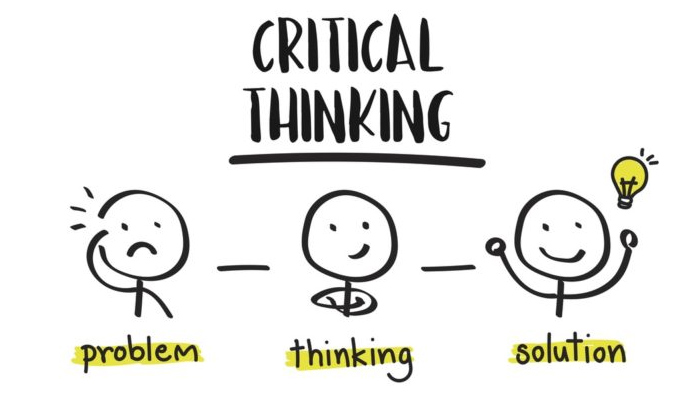
Building Critical Thinking Skills offers several benefits that go beyond academics:
1. Improved Academic Performance
Students who can analyze and evaluate information effectively often excel in subjects like science, mathematics, and social studies. Critical thinking enhances comprehension, application of concepts, and the ability to connect ideas across various subjects.
2. Better Decision-Making
When students assess information objectively, they can make sound decisions in various aspects of life, from academics to personal relationships. Critical thinkers are also better equipped to handle unexpected situations.
3. Enhanced Creativity and Innovation
By questioning existing ideas and brainstorming new solutions, students become creative thinkers capable of innovation. Critical thinking allows them to approach problems from different angles and come up with original ideas.
4. Effective Communication
Critical thinkers articulate their ideas clearly and effectively. This skill improves communication during debates, presentations, and discussions, which is especially important for collaborative learning environments.
5. Lifelong Learning
The ability to think critically helps students become independent learners who can adapt to new information, evaluate various sources, and apply knowledge effectively.
How Critical Thinking Is Taught in Modern Education
Educational institutions, including Co-ed Boarding Schools in Dehardun and ICSE Boarding schools in India, are increasingly focusing on skill-based learning instead of rote memorization.
Modern Teaching Approaches Include:
- Inquiry-based learning
- Collaborative projects
- Real-world problem-solving
- Interactive classroom discussions
One of the most effective approaches is Activity-Based Learning, where students actively participate in tasks that require analysis and decision-making rather than passive listening.
Effective Ways to Develop Critical Thinking Skills
Developing these skills require conscious effort and consistent practice. Here are some effective methods:
1. Encourage Project-based Learning
Project-based learning helps students apply theoretical knowledge to real-world problems. By engaging in group projects and research activities, students learn to gather information, evaluate sources, and develop practical solutions.
This approach also enhances their ability to work as part of a team and communicate their ideas effectively.
2. Promote Active Learning
Active learning involves brainstorming, debates, peer teaching, and role-playing activities. These techniques encourage students to actively engage with topics and critically assess their understanding.
Teachers can create classroom environments where students feel comfortable asking questions, sharing ideas, and challenging assumptions.
3. Provide Freedom to Learn
Giving students the freedom to explore topics of interest fosters creativity and independent thought. Allowing them to research, analyze, and present their findings encourages deeper learning and helps them gain confidence in their abilities.
4. Encourage Analyzing and Assessing Ideas
Teachers should encourage students to examine facts, compare perspectives, and evaluate the reliability of information. Developing this skill helps students form logical arguments, identify biases, and make well-informed decisions.
5. Connect Learning to Real-Life Situations
Relating theoretical concepts to real-life examples helps students understand the practical application of their knowledge.
Case studies, simulations, and real-world problem-solving activities enhance critical thinking by encouraging students to think beyond textbooks.
How SRCS Dehradun Promotes Critical Thinking

As one of the top boarding schools in India, Shri Ram Centennial School Dehradun integrates critical thinking skills into its teaching methodology to help students achieve their full potential.
The school emphasizes project-based learning, active discussions, creative assignments, and collaborative activities to nurture independent thinking and analytical skills.
Through innovative classroom techniques, students are encouraged to analyze situations, evaluate options, and make thoughtful decisions.
The school also provides ample opportunities for students to participate in debates, presentations, and group projects, further enhancing their skills.
The holistic approach at the school ensures that students are well-prepared for both academic success and real-world challenges.
By emphasizing critical thinking, the school equips students with the tools they need to excel in their studies and beyond.
Conclusion
Mastering critical thinking skills is crucial for students who want to achieve long-term success. By encouraging curiosity, logical reasoning, and creativity, schools like SRCS Dehradun ensure that students are equipped with the skills they need to excel academically and beyond.
From improving academic performance to shaping personal growth, critical thinking influences every aspect of a student’s journey. While challenges exist, the right educational environment, teaching methods, and personal effort can make a significant difference.
As education continues to evolve, one thing remains certain: students who learn how to think, not just what to think, will always be better prepared for the future.