

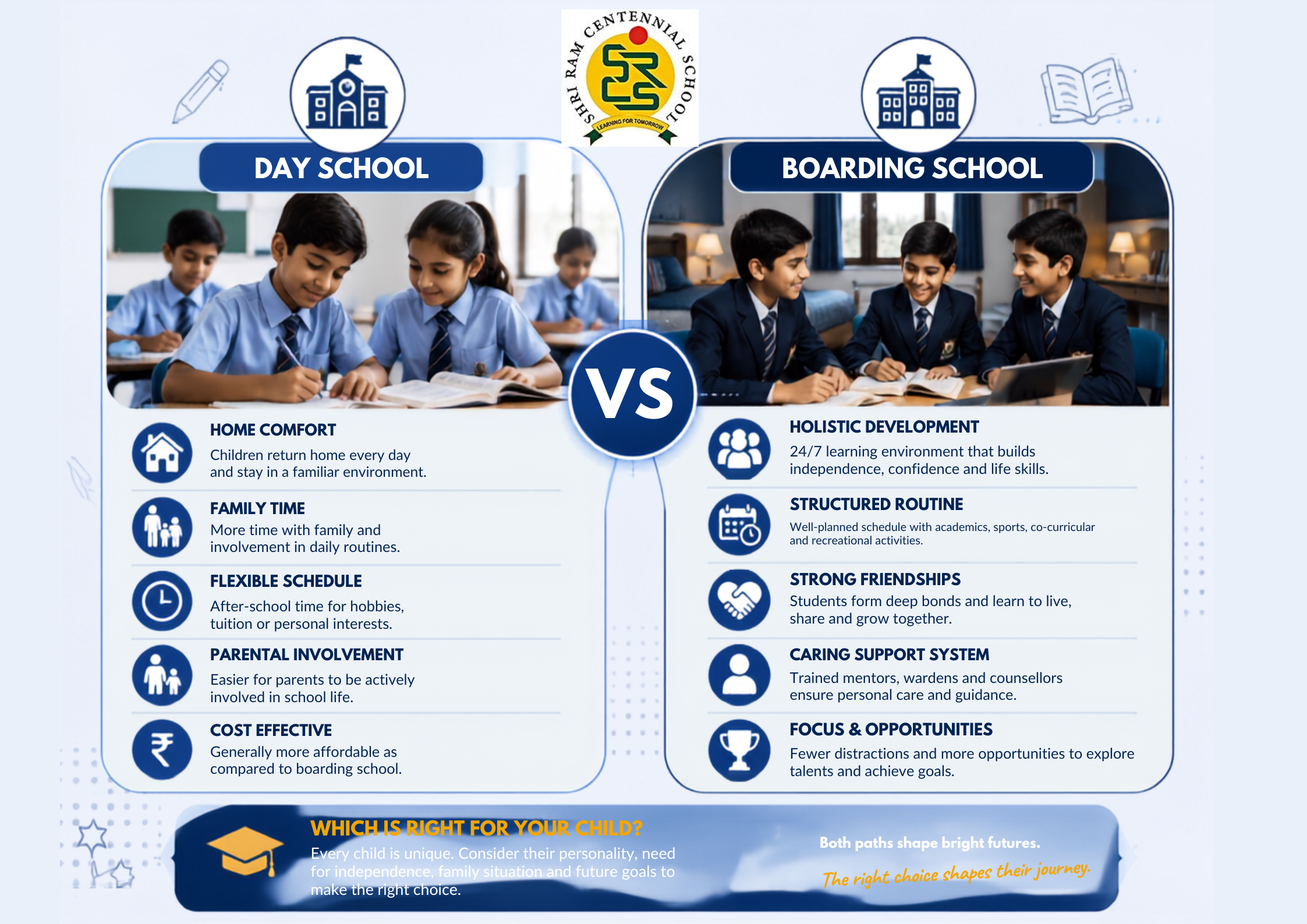
Perhaps the biggest decision many parents must make involves the school their children will attend. The choice between Day School vs Boarding School is rarely an easy one, as there is no right or wrong answer for every child.
It can really come down to factors such as the following: Your child’s learning style and personality; family situation and financial situation; your child’s career aspirations. Each day school and each boarding school provides quality education, yet they each contribute to a child’s education in a unique way.
What Is a Day School?
A day school is a school where students go during the day and have to return home to their parents after the school day ends. Parents are involved with their child’s activities, homework and overall day at school.
Advantages of Day Schools
- Daily family interaction and emotional support.
- Lower overall costs compared to boarding schools.
- Parents can closely monitor academic progress.
- Students maintain their local social circle.
Challenges
- Longer daily commuting time.
- Limited time for extracurricular activities after school.
- Fewer opportunities for developing complete independence.
What Is a Boarding School?
A boarding school is a school that provides students with both education and a place to live. Unlike normal school, boarding schools allow students to live with the school on a day-to-day basis to focus their energy on athletics, education, leadership, and character building.
Advantages of Boarding Schools
- Highly structured daily schedule.
- Strong focus on academics and holistic development.
- Development of independence, discipline, and responsibility.
- Access to sports, performing arts, clubs, and leadership programmes.
- Lifelong friendships through a close-knit campus community.
Challenges
- Students spend less time at home during the term.
- The adjustment period may take time for younger children.
- Boarding schools generally involve higher fees due to residential facilities.
Day School vs Boarding School: Key Differences
| Feature | Day School | Boarding School |
| Living Arrangement | Students return home daily | Students live on campus |
| Independence | Moderate | High |
| Parent Involvement | Daily | Regular thorough visits and communication |
| Academic Support | School hours | Extended academic support beyond class hours |
| Extracurricular Activities | Limited after school | Integrated into daily life |
| Time Management | Flexible | Structured routine |
| Social Development | Local peer group | Diverse community with students from different backgrounds |
Which Option Is Better for Your Child?
A day school may be the right choice if your child:
- Thrives with daily family interaction.
- Prefers staying close to home.
- Is actively involved in community activities outside school.
A boarding school may be a better fit if your child:
- Is ready to become more independent.
- Enjoys a structured environment.
- Wants broader opportunities in academics, sports, arts, and leadership.
- Can adapt to living in a diverse residential community.
Why Many Parents Choose Boarding Schools Today
A boarder school can offer more than just academic excellence. A boarding school environment enhances the educational process by offering mentorship and collaboration opportunities for learning, sports, and culture, as well as leadership programmes within a controlled environment.
This helps foster confidence, perseverance, time management and social skills, which are all needed for college and career readiness.
Conclusion
When making the choice between day school vs. boarding school, it is important to consider which institution will foster a student’s learning and development most effectively. Day school can offer a more comfortable home environment, whereas boarding school will enable students to learn valuable life skills.
As you consider sending your child to a boarding school in Dehradun, make sure to tour the campus and meet the teaching staff to determine which educational facility will be the best fit for your child’s academic and personal development.
Frequently Asked Questions
Q1: Is a boarding school better than a day school?
Ans. Neither is universally better. The right choice depends on your child’s personality, goals, and family preferences. Both can provide an excellent education when they align with the student’s needs.
Q2: At what age should a child join a boarding school?
Ans. There is no single ideal age. Parents should consider their child’s emotional readiness, independence, and ability to adapt to a residential environment.
Q3: Are boarding schools safe?
Ans. Reputable boarding schools maintain comprehensive safety measures, trained residential staff, healthcare support, and supervised campus life to ensure student well-being.
Q4: Does a boarding school improve academic performance?
Ans. Many students benefit from structured study schedules, teacher accessibility, and fewer distractions, though success ultimately depends on the student’s commitment and the school’s educational approach.