



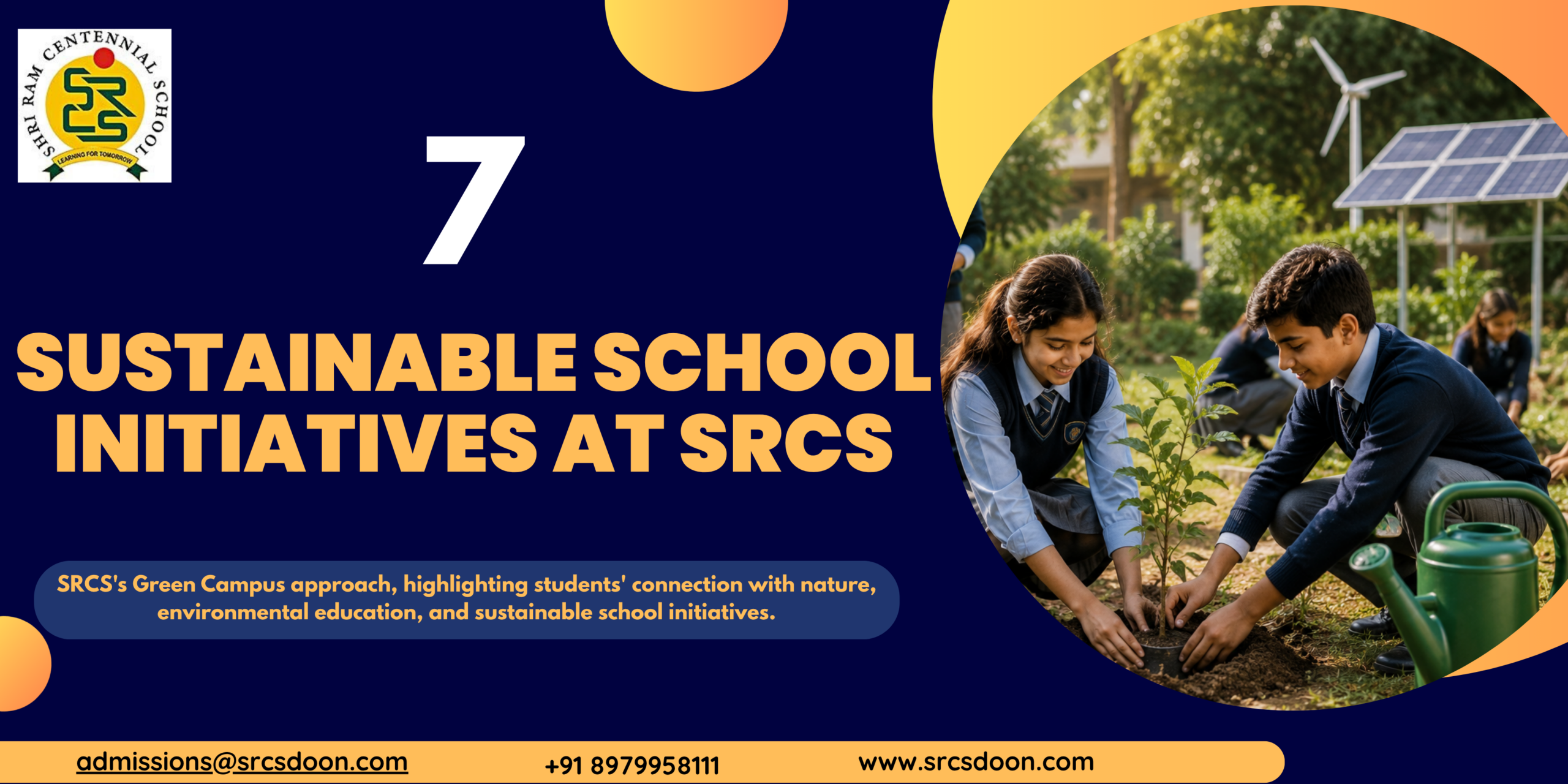
A school campus does not have to be limited to classrooms and laboratories and sports facilities. It can also be a living environment in which students learn how to appreciate nature, have an understanding of environmental responsibility and make sustainable decisions in their daily lives. The concept of Green Campus is to make sustainability a part of the environment and education itself.
Shri Ram Centennial School (SRCS) puts its students in connection with nature through environmental activities, Nature Club, outdoor learning and cleanliness and responsible initiatives. SRCS’s location in the natural environment of Dehradun is also a significant element in the learning and development of the students.
What Is a Green Campus?
A green campus is a school where there is a commitment to the use of natural resources, awareness of the environment and cleanliness, biodiversity and sustainable practices.
But it’s not just about trees around a school that are green. A truly sustainable campus also helps educate students to value the protection of the environment and to have opportunities for responsible behaviour.
This can include:
- Protecting green spaces
- Encouraging cleanliness
- Learning about biodiversity
- Reducing unnecessary waste
- Conserving natural resources
- Participating in environmental activities
- Developing responsible everyday habits
For students, these experiences can turn environmental concepts from textbook topics into practical lessons.
Why Sustainable School Practices Matter
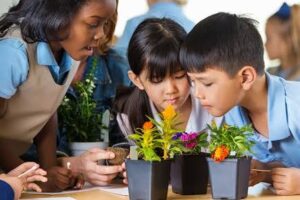
A sustainable school can make a significant contribution to raising citizens to be environmentally responsible.
School is an important part of a child’s life. The actions they take there can have a lasting impact on how they interact with the outside world in the future. By fostering students’ daily habits of keeping classrooms clean and tidy, respecting nature, getting involved in environmental activities, and understanding the value of conserving resources, sustainability becomes an integral part of their life.
A sustainable approach can also support:
- Environmental awareness
- Responsibility and discipline
- Appreciation of nature
- Teamwork
- Problem-solving
- Community participation
- Responsible citizenship
This makes sustainability an educational opportunity rather than simply a campus-management goal.
1. Nature-Based Learning at SRCS
SRCS has one of the plus points: it is situated naturally in Dehradun. The school calls its campus a paradise of nature and aims for students to have a stronger relationship with nature. Outdoor education activities are nature walks, camping and environmental conservation activities.
Extracurricular activities enable students to experience the world firsthand. Students will not just read about ecosystems, plants, animals, or conservation; they will experience it and appreciate it.
Such hands-on experience can help reinforce environmental ideas and make them more memorable and meaningful.
2. The Nature Club
The Nature Club is an important part of SRCS’s environmental learning opportunities. The school describes the club as a space where students interested in nature can explore their interests while developing a sense of responsibility toward the environment.
Student clubs can make environmental learning more engaging because students participate actively rather than simply listening to a lesson.
Through nature-focused activities, students can develop:
- Curiosity about the natural world
- Awareness of local ecosystems
- Teamwork
- Observation skills
- Environmental responsibility
- A greater appreciation for biodiversity
The Nature Club therefore supports both student development and environmental awareness.
3. Environmental Conservation Activities
Environmental conservation becomes more meaningful when students have opportunities to participate in practical activities.
SRCS incorporates environmental conservation into its outdoor and experiential learning approach. Such activities encourage students to understand that protecting nature requires individual and collective responsibility.
Students can learn important principles such as the following:
- Protecting plants and green areas
- Respecting wildlife
- Keeping natural spaces clean
- Understanding the importance of biodiversity
- Making responsible choices about resources
These experiences can help students see themselves as active participants in environmental protection.
4. Cleanliness and Student Responsibility
Starting with daily habits is the start of sustainability.
Recently, SRCS held a Cleanest Class of the Month Drive to encourage students to keep their classrooms neat, lockers orderly, soft boards clean and their learning areas disciplined. This involved the Golden Broom Awards for various age groups.
While cleanliness and sustainability are not synonymous, the activities can help create a more sustainable environment for the school. Students understand that people should take responsibility for the care of shared space.
Little things like not littering, keeping classrooms tidy and maintaining the building can be part of a pupil’s normal routine.
5. Environmental Education Through Student Clubs
The stronger the environmental learning, the more it goes beyond the scope of formal lessons in the classroom.
SRCS offers various student clubs where students can discover what they like and enjoy through activities and togetherness such as the Nature Club.
It is a good example of the principle of School Sustainability Initiatives (SSI) that students are not only informed about sustainability but are given opportunities to be involved.
Clubs can use to help students ask questions, collaborate, create projects, and investigate solutions to environmental issues.
6. Outdoor Education and Connection With Nature
In the modern era, teaching can be very classroom-orientated. A useful balance is to be found in outdoor learning.
At SRCS, the natural environment provides opportunities for students to learn outside. The school’s strategy is based on nature walks, camps, conservation initiatives, etc.
By learning outdoors, students can have a greater bond with the environment and be stimulated to observe, be curious, and appreciate the environment.
This can be especially significant for a boarding school, as students are a significant part of the campus community and may feel the campus is part of their everyday life.
7. Building Environmental Responsibility for the Future
The ultimate purpose of a green campus should not simply be to create an attractive environment. Its higher calling is to educate pupils to care for the planet.
Informed and responsible citizens are needed to respond to environmental challenges like climate change, biodiversity loss, pollution and resource depletion.
Schools can contribute by helping students develop:
- Sustainable habits
- Environmental awareness
- Critical thinking
- Respect for natural resources
- Community responsibility
- Problem-solving abilities
At SRCS, environmental learning is connected with the school’s broader focus on holistic development, character education, and community responsibility.
How a Green Campus Benefits Students
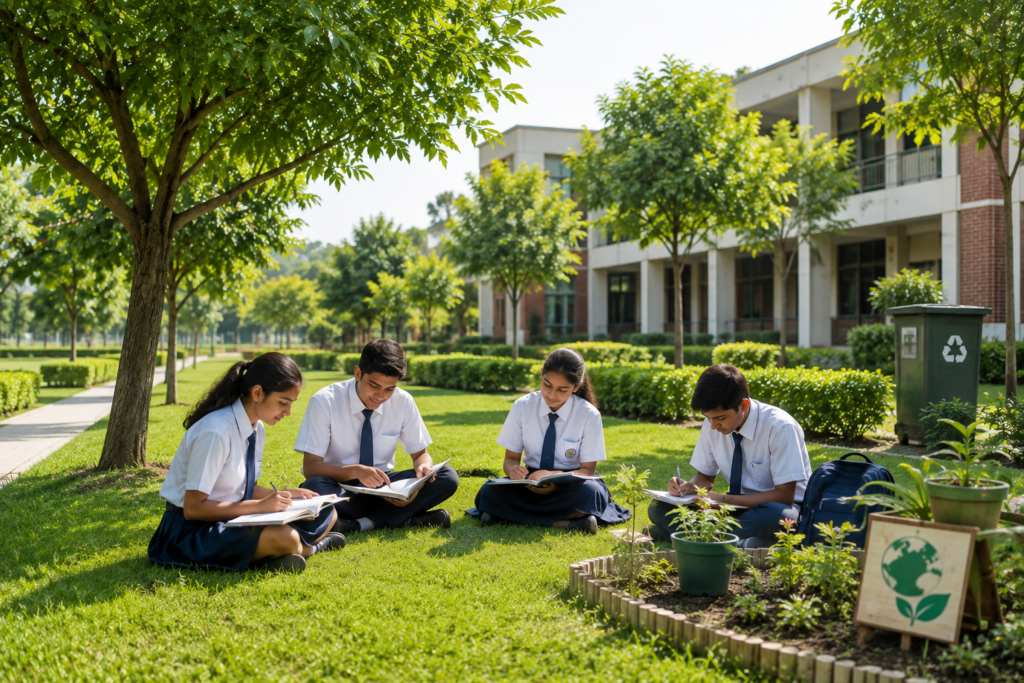
A sustainable learning environment can influence students in several ways.
Encourages Responsibility
Students learn that maintaining shared spaces and protecting natural surroundings is everyone’s responsibility.
Makes Learning Practical
Environmental activities can connect classroom concepts with real-world experiences.
Develops Teamwork
Nature and conservation activities often require students to work together toward a common objective.
Builds Awareness
Regular exposure to nature can encourage students to notice environmental issues and think about possible solutions.
Supports Holistic Development
Environmental responsibility complements academic learning by developing character, awareness, and social responsibility.
Sustainability Is More Than a Trend

It is easy for schools to use the word “green” as a marketing term. However, a sustainable approach in its true sense will only be achieved with sustained actions and involvement from students.
Therefore, a sustainable school should aim for sustainable behaviour and not one-off environmental events. Students need to have an appreciation of the importance of conservation and how their daily choices impact the world around them.
SRCS offers various opportunities for environmental awareness development through environmental activities, nature-based learning, student clubs, and cleaning activities.
Conclusion
A green campus can be one of the most effective learning environments provided by a school. Sustainability is not just a subject students study but one they experience when they learn amongst nature, engage in environmental activities and take responsibility for their environment.
A culture that promotes respect for the environment and an understanding of their role in it is fostered at SRCS through the Nature Club, outdoor education, environmental conservation activities and cleanliness initiatives.
The aim of environmental education is far greater than to make our school green. It’s about nurturing young people to bring their good habits and awareness of the environment with them off campus and into their communities and future lives.
Frequently Asked Questions
1. What is a Green Campus?
Ans: A green campus is a school environment that promotes sustainability, environmental awareness, conservation, and responsible habits.
2. What is a Sustainable School?
Ans: A sustainable school encourages students and staff to use resources responsibly while developing environmental awareness and sustainable habits.
3. What school sustainability initiatives does SRCS promote?
Ans: SRCS promotes nature-based learning, the Nature Club, environmental conservation activities, and cleanliness initiatives such as the Golden Broom Awards.
4. How does environmental education benefit students?
Ans: Environmental education helps students understand nature, develop responsible habits, and become more aware of environmental challenges.
5. How does SRCS connect students with nature?
Ans: SRCS provides opportunities such as nature walks, outdoor learning, camping, conservation activities, and participation in its Nature Club.