The first few years of a child’s life are crucial in developing their learning, behaviour and development. Research has long demonstrated that high-quality early years education prepares children for success in learning, social interactions and lifelong learning. These are not just about learning the alphabet and counting numbers but about developing confidence, curiosity, creativity and life skills.
Why Early Years Education Matters
Infants’ brains grow fast in the first few years of life. They learn at this time by observing, interacting and exploring. Quality early years education gives the right mix of structured learning and creative experience, allowing children to develop academically, emotionally, socially and physically.
A strong early education helps children:
- Develop language and communication skills
- Build confidence and independence
- Improve concentration and memory
- Learn emotional regulation
- Develop positive social relationships
- Strengthen problem-solving and critical thinking abilities
- Prepare for future academic challenges
These skills become the foundation for lifelong success.
The Power of Play-Based Learning
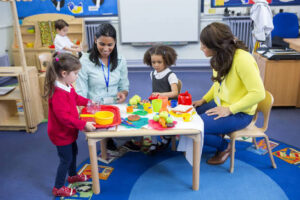
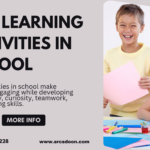
A child learns much better when he or she is engaged in discovery about the environment. That is why play-based learning is a vital component of early childhood education.
Play is more than fun! All activities provide opportunities for learning. From blocks to painting, puzzles to role-play, nature to blocks, children are developing skills that promote their growth.
Benefits of play-based learning include the following:
- Encourages creativity and imagination
- Builds communication and language skills
- Develops teamwork and cooperation
- Improves fine and gross motor skills
- Enhances problem-solving abilities
- Promotes confidence through exploration
- Makes learning enjoyable and meaningful
When children enjoy learning, they become naturally curious and motivated to continue discovering new ideas.
Encouraging Curiosity Every Day
Learning is motivated by curiosity. Young children have an insatiable curiosity – they constantly ask questions to find out what is happening to them.
Good teachers stimulate children to investigate, observe, experiment and think by themselves instead of giving them answers. It builds confidence and enhances the analytical abilities.
Children are given opportunities to be active, not passive learners, through simple classroom experiences like storytelling, science experiments, nature walks, music, creative arts, and collaborative projects.
Kids who have a foundational curiosity will grow into adults with confidence and independent thinking.
Building Strong Foundations for Lifelong Learning
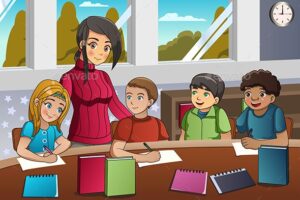
Much more than academic knowledge is required for a child to be successful. Strong foundational learning builds the skills required for success in learning and life.
These foundations include:
Language and Literacy
Children begin developing reading, listening, speaking, and writing skills through stories, conversations, songs, and interactive classroom activities.
Early Numeracy
Basic mathematical concepts such as counting, sorting, recognising patterns, measuring, and comparing objects are introduced through practical experiences.
Social and Emotional Development
Children learn empathy, kindness, cooperation, patience, and respect while interacting with teachers and classmates.
Physical Development
Indoor and outdoor activities strengthen coordination, balance, flexibility, and overall physical wellbeing.
Creativity and Expression
Art, music, dance, drama, and imaginative play allow children to express themselves confidently while enhancing creative thinking.
Together, these elements create the strong foundational learning required for future academic excellence.
The Role of Early Childhood Education
Quality early childhood education emphasises the development of the whole child, not just academics.
An effective early learning environment helps children:
- Build healthy routines
- Develop self-confidence
- Learn responsibility
- Improve communication skills
- Foster emotional resilience
- Become independent learners
- Respect diversity and teamwork
These qualities prepare children not only for school but also for life.
How Boarding Schools Support Early Learning

While many people think of boarding schools for older students, those that offer early years programmes offer a different environment that is beneficial to children because of the structured routines, caring educators, enriching activities and holistic development that children receive.
At SRCS, early learners experience:
- Safe and nurturing classrooms
- Experienced and compassionate teachers
- Interactive learning experiences
- Age-appropriate academic programmes
- Sports and outdoor activities
- Music, dance, art, and creative expression
- Character-building opportunities
- Individual attention and guidance
Every experience is carefully designed to support both academic growth and emotional wellbeing.
Parents and Teachers: A Strong Partnership
Education is best achieved through partnership between parents and teachers.
Children are encouraged to remember what they are learning through regular communication, shared aims and common reinforcement at home and school. Parents can help their child by reading with them, asking them questions, allowing children to express their creativity and acknowledging their everyday successes.
This partnership helps to provide a positive setting for children to feel safe, motivated and excited about learning.
Preparing Children for the Future
The challenges ahead require more than good grades. To thrive in an ever-evolving world, children require creativity, communication ability, adaptability, collaboration and critical thinking skills.
Through the support of effective early childhood education, combined with strong foundational learning and nurtured by children’s confidence and curiosity through play-based learning, children have a strong potential to be lifelong learners.
Conclusion
Early years are a once-in-a-lifetime opportunity to shape a child’s future. Each story read, each question answered, each game played, and each discovery made adds to their growth.
We believe at SRCS that a place for lifelong learning, learning through curiosity and learning through confidence should be provided. We approach early years education in a balanced way, while supporting meaningful play-based learning, a full early childhood education and strong foundational learning, all leading to the development of the skills, values and mindsets necessary for a successful future for every child.
It’s joyful learning, nurturing guidance, and limitless exploration that are the strongest foundations.
Frequently Asked Questions FAQs
Q1: What is early years education?
Ans. Early years education builds children’s academic, social, emotional, and physical skills during their formative years.
Q2: Why is play-based learning important?
Ans. Play-based learning encourages creativity, problem-solving, confidence, and active learning through fun activities.
Q3: What are the benefits of early childhood education?
Ans. Early childhood education helps children develop communication, independence, and school readiness.
Q4: What is foundational learning?
Ans. Foundational learning focuses on early literacy, numeracy, and life skills that support future success.
Q5: How does SRCS support early years education?
Ans. SRCS combines early years education, play-based learning, and early childhood education to provide holistic child development.