


When selecting a boarding school in India, parents frequently consider holistic development, extracurricular activities, and academic success. But one of the most important things that is commonly overlooked is is the availability of first aid and emergency care in hostels. It is essential for the health of children and the peace of mind of their parents to make sure that they live in a secure and prepared environment.
The importance of emergency treatment and first aid in dorms, the procedures that schools ought to implement, and how parents can make sure their children are in capable hands will all be covered in this blog.
Why First Aid and Emergency Care in Hostels Is Essential
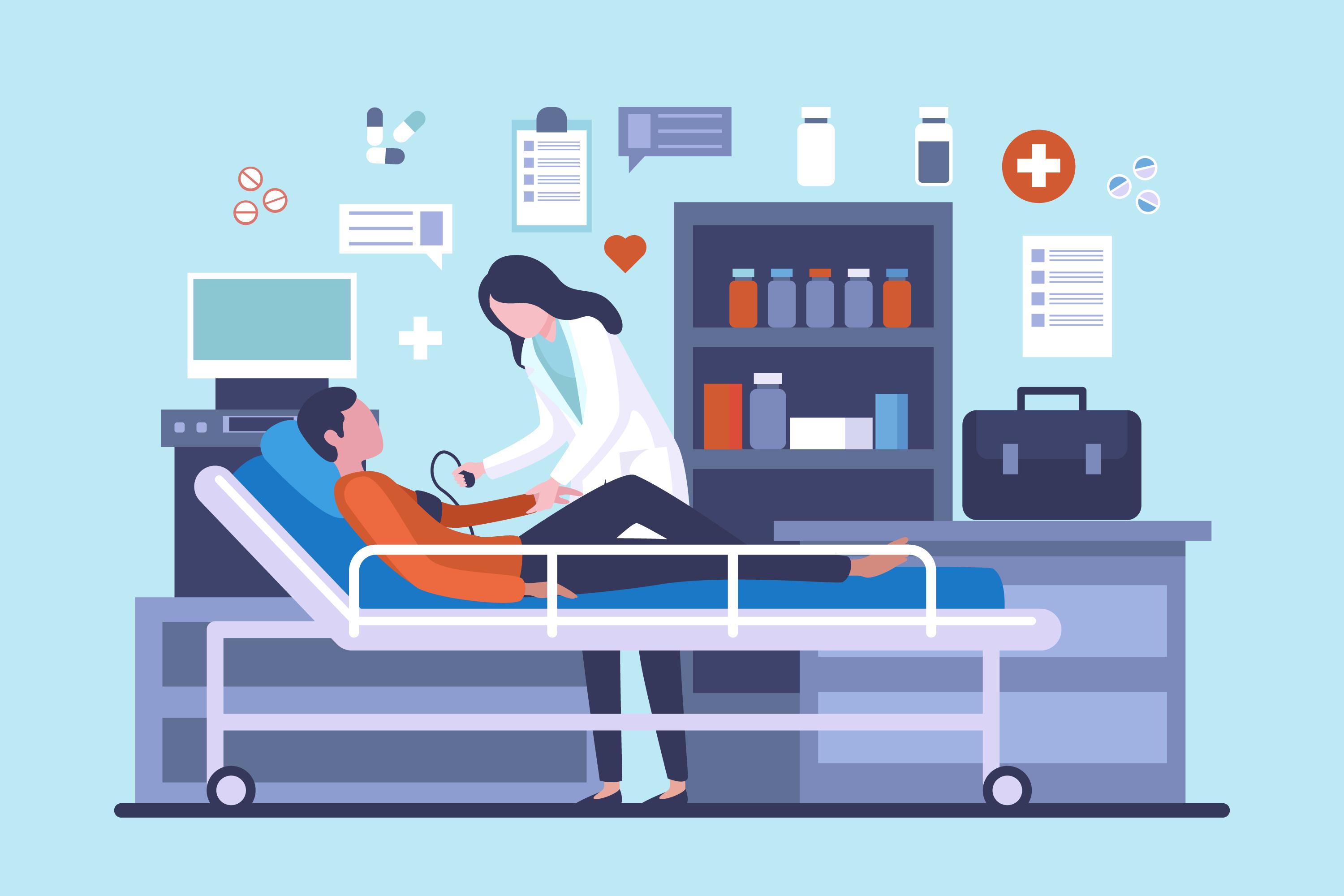
Children living away from home face a variety of challenges—new environments, independence, and peer interaction. Amid these changes, health and safety must remain a top priority. Hostels often accommodate hundreds of students, making it essential to have well-structured medical support systems.
Immediate care during accidents, illnesses, or sudden health conditions can make all the difference. Whether it’s a minor cut or a more serious medical emergency, trained staff and proper facilities help reduce risks and ensure quick recovery.
Key Components of Effective First Aid and Emergency Care
1. On-Site Medical Facilities
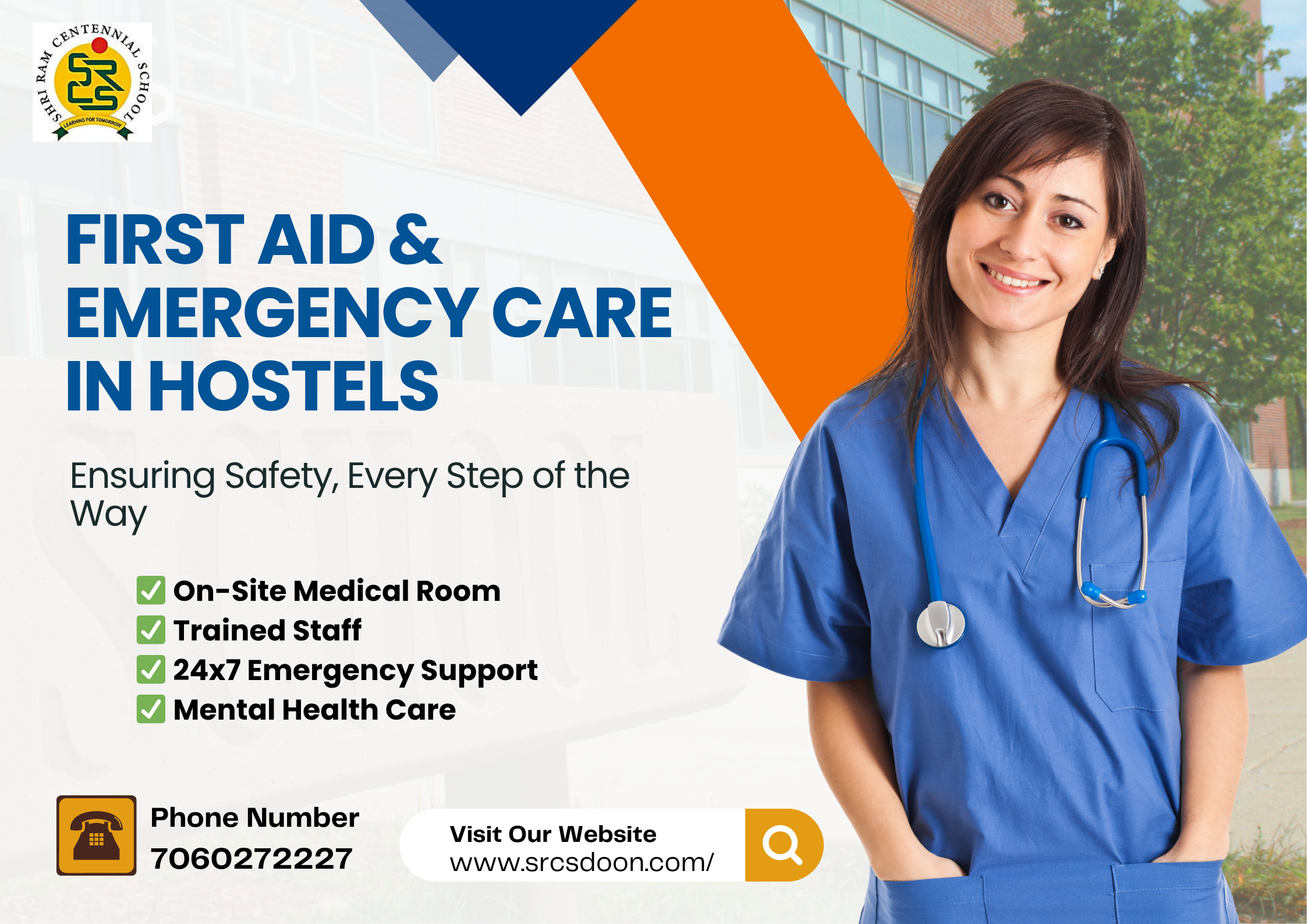
A hostel should always have a well-equipped infirmary or medical room stocked with essential first-aid supplies. This includes bandages, antiseptics, pain relievers, thermometers, and emergency kits for conditions like asthma or allergies.
2. Trained Hostel Staff
It’s not just about having medical supplies; staff must know how to use them. Hostel wardens, teachers, and caretakers should be trained in CPR, wound dressing, and handling emergency situations until professional help arrives.
3. Access to Qualified Medical Professionals
While first aid is the first response, hostels must ensure round-the-clock availability of a doctor or nurse, either on-campus or on-call, for timely interventions.
4. Emergency Response Plans
Every hostel should have a clear action plan for emergencies such as injuries, sudden illnesses, or even fire and natural disasters. Drills and awareness programs help students know what to do when urgent situations arise.
5. Mental Health Support
First aid doesn’t only apply to physical injuries. Emotional well-being is equally important. Having counselors or mental health professionals on call ensures students get the support they need.
How Boarding Schools in India Are Enhancing Student Safety
Modern Boarding Schools in India understand the importance of student health and safety. Many now invest in digital health records, on-campus clinics, tie-ups with reputed hospitals, and regular health check-ups. Parents are also given updates to stay informed about their child’s well-being.
Such initiatives ensure that safety is not just a rule but a culture, allowing students to thrive academically and personally without compromising on health security.
First Aid Situations Commonly Encountered in Hostels
- Minor Cuts and Bruises – Often from sports or daily activities.
- Sprains and Strains – Due to physical activities or accidental falls.
- Fever and Common Colds – Quick treatment prevents spread among hostel residents.
- Allergic Reactions – From food, insect bites, or environmental triggers.
- Asthma or Breathing Issues – Require immediate attention and proper equipment.
- Burns or Scalds – Usually minor but need careful handling.
Each situation requires a prompt and informed response to prevent escalation.
Role of Parents in Ensuring Safety
Even though schools are responsible for providing medical facilities, parents should also play an active role. Here are some steps:
Share Complete Medical History: Ensure the school has details of your child’s allergies, medications, and health concerns.
Provide Emergency Medications: Supply any prescribed medicines with clear instructions.
Visit the Hostel Facilities: During admissions, check the medical facilities, staff training, and tie-ups with local hospitals.
Stay Informed: Ask about the school’s emergency protocols and ensure they align with best practices.
Creating a Culture of Safety in Hostels
Hostel safety is not just about facilities—it’s also about awareness. Schools should encourage students to learn basic first aid and emergency response skills. Peer support programs, awareness workshops, and interactive training sessions empower students to handle unexpected situations calmly and effectively.
Conclusion
Ensuring First aid and Emergency care in hostels is not an optional extra—it’s a necessity. Parents entrust schools with their children’s safety, and having proper systems in place gives peace of mind and protection. Reputable institutions like leading Boarding Schools in India are setting benchmarks in student health and safety, ensuring children grow in a secure and supportive environment.
Frequently Asked Questions (FAQs)
Q1. Why is First aid and Emergency care in hostels important?
It ensures quick response to accidents or health issues, preventing them from becoming severe.
Q2. Do hostels have trained medical staff?
Most reputable hostels have on-site or on-call medical professionals and ensure staff are trained in basic first aid.
Q3. How do schools handle major medical emergencies?
They usually have tie-ups with nearby hospitals for quick transportation and treatment.
Q4. Should parents provide personal medical kits?
Yes, parents should provide necessary medications, especially for chronic conditions, but hostels should have complete first-aid facilities.
Q5. Are mental health emergencies also covered?
Many modern hostels provide access to counselors and mental health professionals to support emotional well-being.