




Every child learns differently, and visual learning is one of the most effective styles, helping students absorb information better through images, diagrams, colours, videos, and visual layouts. As classrooms become more technology-driven, visual learners gain a natural advantage, yet many parents and teachers still struggle to guide them with the right methods. This blog explains six powerful strategies, their benefits and challenges, and the key traits of visual learners—useful for students in any setting, whether in a neighbourhood school or a top school in India, to improve understanding, retention, and confidence.
Table of Contents
ToggleWhat are visual learning techniques?
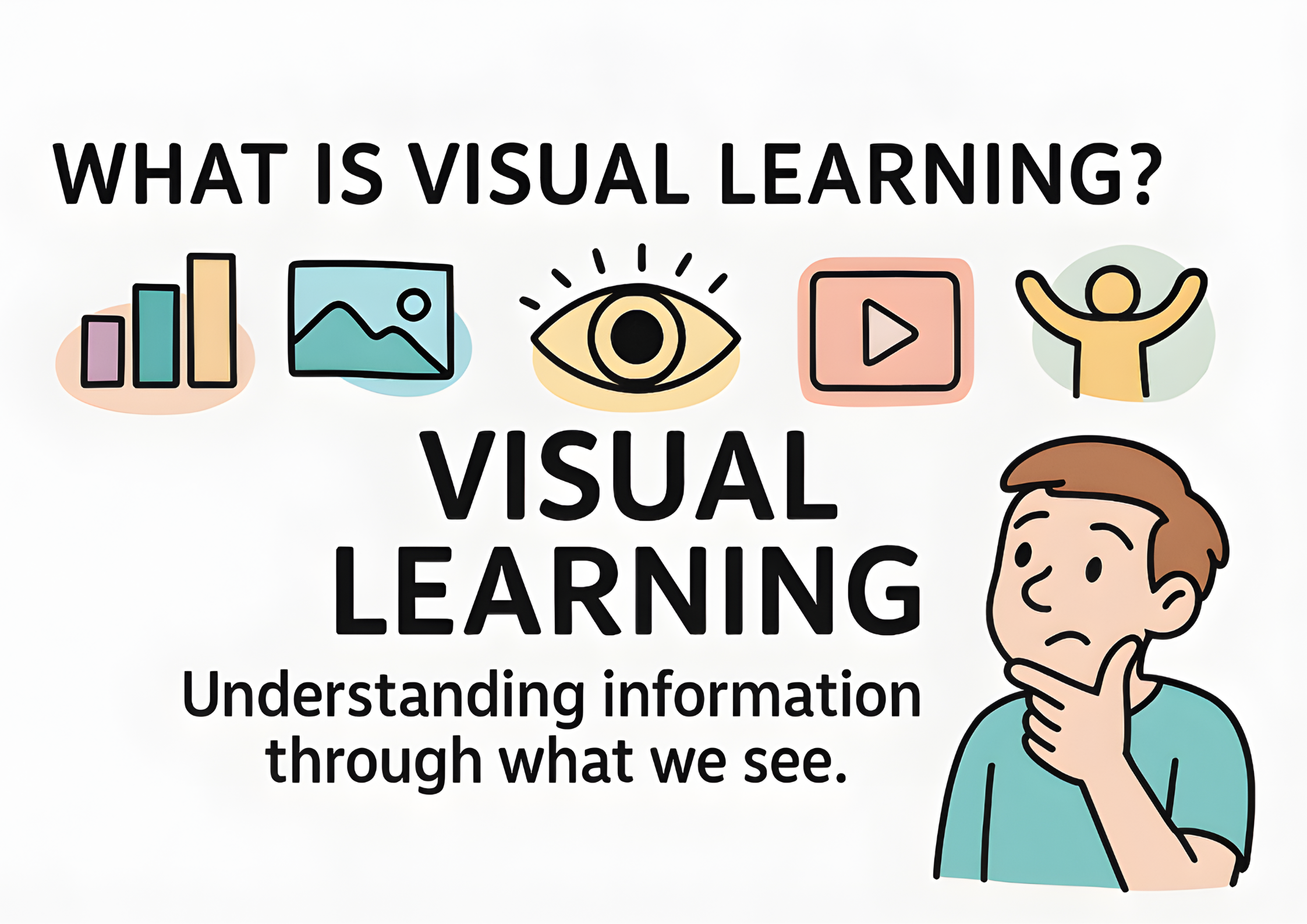
Key Characteristics of Visual Learners

Visual learners often share a few noticeable traits. While each student is unique, the following characteristics commonly appear in visual learning profiles:
1. Strong Observation Power
Visual learners notice colours, shapes, patterns, and layouts quickly. They often point out details that others may overlook.
2. Ability to Recall Images Easily
They tend to remember images, infographics, and diagrams better than long written explanations or verbal instructions.
3. Preference for Written Content Over Audio
Although they may enjoy listening, visual learners often understand instructions better when they can see them in writing.
4. Organized and Structured Thinking
Visual learners like clean layouts, bullet points, and structured presentations. A messy notebook can overwhelm them, whereas a neatly designed one brings clarity.
5. Creativity and Spatial Awareness
They often excel in drawing, design, map-reading, and tasks that require spatial understanding.
Knowing these traits helps parents and educators create a supportive environment that allows visual learners to thrive.
6 Highly Effective Strategies for Visual Learners

These strategies are designed to maximize focus, strengthen memory, and make study sessions more productive. Each one works well for learners of all ages — from school students to adults preparing for competitive exams.
1. Use Diagrams, Charts & Mind Maps
Visual learners connect ideas through structure. Tools like flowcharts, mind maps, tables, and labelled diagrams help them break complex concepts into simple, connected visuals.
Benefits:
-
Simplifies heavy topics
-
Improves recall through visual associations
-
Makes revision faster
Challenges:
-
Time-consuming to prepare
-
May overwhelm students who prefer text
2. Colour-Code Notes for Better Clarity
Colour helps visual learners differentiate and highlight key information. This technique works well for subjects like science, history, and geography.
How to do it:
Assign colours for definitions, formulas, dates, examples, or diagrams.
Benefits:
-
Makes notes more engaging
-
Enhances memory through colour cues
Challenges:
-
Excessive colours can become distracting
-
Requires consistent note-taking habits
3. Watch Educational Videos or Animations
Visual learners absorb information quickly through motion-based learning. Videos, animations, and real-life demonstrations make abstract concepts meaningful.
Benefits:
-
Easier understanding of complex concepts
-
Keeps students motivated and focused
-
Helps with long-term memory
Challenges:
-
Risk of distraction if not monitored
-
Quality varies across platforms
4. Practice with Flashcards
Flashcards are effective tools for quick revision. They combine text with imagery to help visual learners recall information instantly.
Benefits:
-
Ideal for vocabulary, formulas, diagrams
-
Supports spaced repetition
-
Encourages active recall
Challenges:
-
Requires effort to create regularly
-
Not suitable for lengthy topics
5. Create Visual learners Study Schedules
A visually appealing timetable — using boxes, grids, or icons — helps learners organise tasks more efficiently.
Benefits:
-
Reduces stress and confusion
-
Provides a clear learning pathway
-
Enhances productivity and self-discipline
Challenges:
-
Needs regular updating
-
Some students may focus too much on designing instead of studying
6. Use Real-Life Visual learners Examples
Objects, models, maps, illustrations, and photos help visual learners connect theory to real-world applications.
Benefits:
-
Strengthens understanding through real examples
-
Helps in subjects like science, geography, and maths
-
Makes learning interactive
Challenges:
-
Not all topics have visual representations
-
Teachers need additional preparation time
Benefits of Visual Learning

Visual learning offers a balanced mix of academic and emotional advantages. Here are some of the major benefits:
Improves Memory & Retention
Because visual learners connect concepts with images, their long-term recall becomes stronger.
Enhances Critical Thinking
Diagrams and graphs encourage learners to analyse, interpret, and compare information.
Makes Learning Engaging
Visual materials reduce monotony and make lessons more interactive.
Supports Independent Learning
Once students master visual techniques, they become more confident and self-sufficient in their study habits.
Helps in Quick Learning
Visual interpretation speeds up understanding, allowing learners to grasp ideas faster and with greater accuracy, making it an excellent approach for Quick Learning without added effort.
Challenges Visual Learners May Face

Although visual learners have many strengths, they can face certain challenges if their learning environment doesn’t match their style.
Struggle with Long Verbal Explanations
Lectures without visual support may feel difficult to follow.
Difficulty with Text-Only Notes
Heavy paragraphs without diagrams can cause loss of concentration.
Over-Reliance on Visual Tools
If visuals are absent during exams or oral tests, visual learners may feel less confident.
Identifying these challenges early helps parents and educators provide balanced support.
Conclusion
Visual learning is more than a preference — it is a powerful approach that helps students connect, understand, and retain information with clarity. By using diagrams, colours, videos, schedules, flashcards, and real-life examples, visual learners can unlock their full potential.
The key is balance. With awareness of the strengths and challenges of this learning style, parents and educators can create an environment where every child learns comfortably and confidently. Whether your child aims for strong academic performance or simply wants to study smarter, these strategies provide a solid pathway to success.
Frequently Asked Questions (FAQs)
1. How do I know if my child is truly a visual learner?
If your child prefers pictures over text, remembers diagrams easily, gets distracted during long verbal lessons, or enjoys drawing and organizing information visually, they may be a visual learner.
2. Can visual learners perform well in subjects like maths and science?
Yes. Visual learners often excel when concepts are explained through graphs, models, flowcharts, and step-by-step visual breakdowns.
3. What study environment works best for visual learners?
A clean, clutter-free space with good lighting, access to coloured pens, charts, and a whiteboard helps visual learners focus better.
4. Do visual learners struggle during exams that don’t allow visual aids?
They may, but practising with written summaries, sample papers, and self-created mental images can help them perform confidently.
5. Are digital tools helpful or distracting for visual learners?
Digital tools like animations, educational apps, and visual quizzes are helpful when used with discipline. Setting time limits prevents distraction and keeps learning effective.


I love how you highlighted the importance of visual aids for students. I’ve found that incorporating more visuals in my own study sessions has really helped with memory retention, especially for complex concepts.