


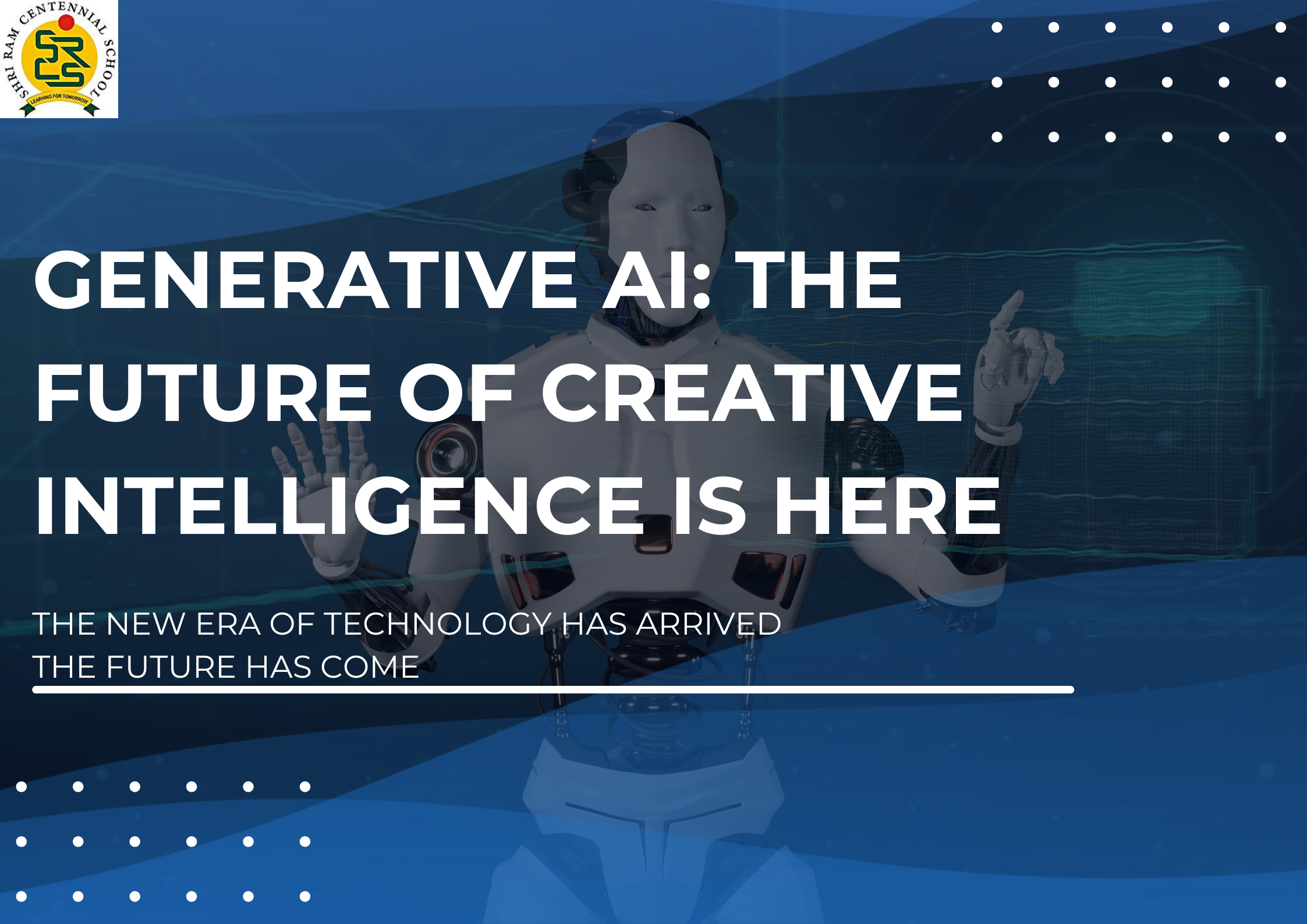
Something remarkable is happening right now — and it’s quietly changing the way we learn, work, and create.
From students writing their first essay to professional designers building brand identities, a new wave of technology is reshaping creativity as we know it. That technology is generative AI, and it’s no longer a buzzword reserved for Silicon Valley insiders.
Whether you are a parent trying to understand what your child is using, a teacher exploring new classroom tools, or simply a curious learner — this guide will walk you through everything you need to know, in plain English.
What Is Generative AI? A Simple Explanation
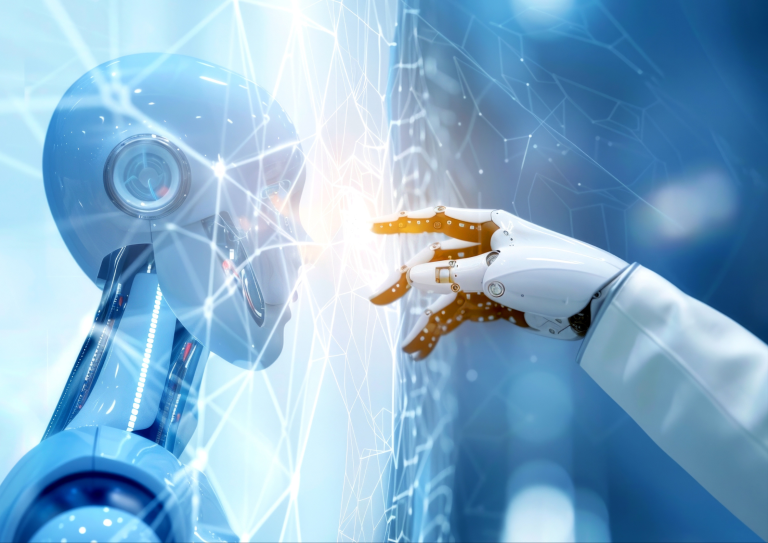
At its core, generative AI refers to artificial intelligence systems that can create new content — text, images, music, code, and video — based on patterns learned from massive amounts of existing data.
Think of it like this: if you taught a child millions of books, poems, and stories, they would eventually write their own. Generative AI works similarly, except it processes data at a scale no human brain could match.
Popular examples include ChatGPT for writing, DALL·E for images, and GitHub Copilot for coding. Each uses a foundational model trained on billions of data points to produce human-like outputs.
How Does Generative AI Actually Work?
Without diving too deep into technical territory, generative AI relies on a type of machine learning called deep learning — specifically, transformer models like the ones powering GPT-4.
Here’s a simple breakdown:
- Training — The AI learns from vast datasets: books, websites, images, and code.
- Pattern Recognition — It identifies relationships between words, concepts, and structures.
- Generation — When given a prompt, it predicts and produces the most relevant response.
- Refinement — Human feedback helps fine-tune the model over time (called RLHF).
Generative AI in Education: What Parents and Teachers Should Know

The classroom is one of the most exciting — and debated — spaces where generative AI is making its mark.
From preschool education all the way through higher studies, AI tools are being integrated to personalise learning, assist students with special needs, and help teachers save hours on administrative tasks.
At the same time, concerns about academic integrity, over-reliance, and misinformation are very real. The key is informed use — knowing when AI supports learning and when it simply replaces it.
How Students Are Using It
Students use generative AI to brainstorm ideas, get explanations of complex topics, practise language skills, and check their writing. When used responsibly, it acts like a patient tutor available at any hour.
How Teachers Are Adapting
Many educators now use AI to generate lesson plans, create differentiated materials, and design assessments. In boarding schools in India and other residential institutions, AI tools are being explored to support students who may not have immediate access to tutors outside school hours.
Real-World Applications: Where It’s Already Making an Impact
The reach of generative AI extends across nearly every sector of modern life:
- Healthcare — AI drafts patient summaries, assists in drug discovery, and generates medical imaging reports.
- Marketing — Brands use AI to create ad copy, social media posts, and personalised email campaigns.
- Entertainment — AI composes music, generates concept art, and writes initial screenplay drafts.
- Legal & Finance — AI tools summarise contracts, identify risks, and automate routine documentation.
- Customer Support — Conversational AI handles queries 24/7, reducing wait times significantly.
The Benefits for Everyday People
You don’t have to be a tech expert to benefit. Generative AI levels the playing field in powerful ways.
A first-time entrepreneur can build a professional website. A student struggling with essay structure can get instant, detailed feedback. A small business owner can produce marketing content without hiring an agency.
Key everyday benefits include:
- Saves time on repetitive writing and creative tasks
- Makes professional-quality output accessible to non-experts
- Helps with language barriers through translation and simplification
- Supports different learning styles by offering content in multiple formats
Concerns and Ethical Questions We Shouldn’t Ignore
No honest conversation about generative AI is complete without addressing its challenges.
Misinformation is a genuine concern — AI can generate convincing but entirely false content. Bias in training data can lead to outputs that reflect or amplify societal prejudices. Ongoing debates around copyright, job displacement, and data privacy are legitimate and unresolved.
Regulators worldwide are working to create frameworks that balance innovation with protection. As users, the most responsible approach is to stay informed, verify AI-generated content, and never rely on it blindly.
The Future of Generative AI: What Comes Next?

We are still in the early chapters of this story.
Researchers are developing models that are more accurate, more energy-efficient, and capable of genuine reasoning — not just pattern-matching. Multimodal AI, which combines text, image, audio, and video in a single system, is already emerging.
AI agents that can autonomously complete tasks — booking appointments, conducting research, writing and executing code — are becoming more capable every year.
Perhaps most importantly, the conversation is shifting from “what can AI do?” to “how do we make sure it’s used well?” That is a question for all of us — not just technologists.
Final Thoughts
Generative AI is not a distant concept from a science fiction film. It’s here, it’s accessible, and it’s already part of daily life for millions of people worldwide.
Understanding it — honestly and clearly — is one of the most valuable things you can do right now, whether you’re a student, a parent, a teacher, or a professional.
The future of creative intelligence is already unfolding. The question is: how will you be part of it?
FAQs
Q1. What is generative AI in simple words?
Generative AI is a type of artificial intelligence that can create new content — such as text, images, music, and videos — on its own. You give it a prompt, and it produces something original based on everything it has learned from existing data. Think of it as a very advanced creative assistant that never sleeps.
Q2. Is generative AI safe for students and children to use?
Yes, when used with proper guidance. Generative AI tools can support learning, spark creativity, and simplify complex topics. However, children should always use them under adult supervision, and students should be taught to verify information rather than accept AI-generated content as fact.
Q3. How is generative AI different from regular AI?
Regular AI is typically built to recognise, classify, or predict — for example, detecting spam or recommending a product. Generative AI goes a step further by actually creating something new. It doesn’t just analyse data; it uses that data to produce original outputs like articles, artwork, or even computer code.
Q4. Will generative AI replace human jobs?
It will change many jobs, but complete replacement is unlikely for most roles. Generative AI handles repetitive, time-consuming tasks — freeing humans to focus on critical thinking, emotional intelligence, and creative decision-making. The most future-proof skill right now is learning how to work alongside AI, not against it.
Q5. How can teachers and parents stay updated on generative AI developments?
Following trusted sources like Google AI Blog, MIT Technology Review, and official updates from AI companies is a good start. Many schools and educational boards are also releasing guidelines on responsible AI use. Staying curious, asking questions, and trying tools firsthand is often the best education of all.