
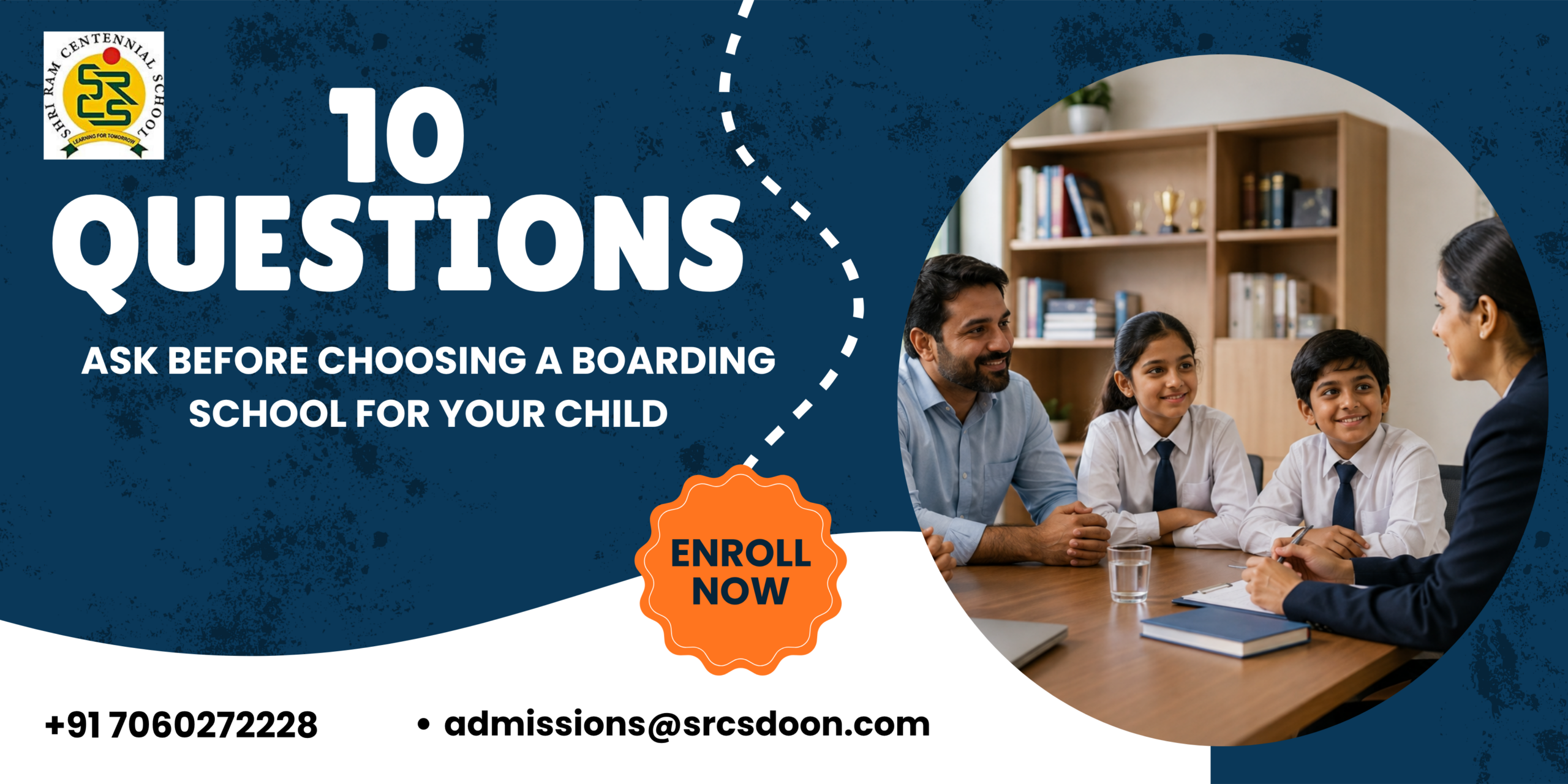
Choosing a boarding school is a major decision for parents. Unlike a day school, a boarding school becomes a child’s academic, social, and residential environment. Students spend much of their time on campus, making factors such as academics, safety, pastoral care, facilities, and overall school culture especially important.
Parents often focus on rankings or examination results, but these are only part of the picture. The right boarding school for your child should match their academic needs, personality, interests, and ability to adapt to residential life.
Before making a decision, ask these 10 important questions.
1. What Curriculum Does the School Follow?
The curriculum is one of the first things parents should evaluate when choosing a boarding school.
Ask whether the school follows CBSE, ICSE, Cambridge, IB, or another curriculum. Consider your child’s learning style and future plans, particularly if they may pursue higher education in India or overseas.
Also ask about:
- Subject choices
- Assessment methods
- Academic support
- Competitive examination preparation
- Career counselling
- Opportunities for advanced learning
A strong curriculum should provide both academic knowledge and opportunities to develop critical thinking and independent learning.
2. How Strong Is the School’s Academic Programme?
Academic results can provide useful information, but parents should look beyond percentages and rankings.
Ask how teachers support students who need additional help and how the school challenges students who are performing strongly.
Important questions include:
- What is the teacher-student ratio?
- How accessible are teachers outside classroom hours?
- Is individual academic support available?
- How frequently is student progress assessed?
- Does the school provide mentoring?
Understanding the school’s approach to boarding school academics can help you determine whether it is suitable for your child.
3. What Are the Boarding Facilities Like?
Residential facilities directly affect a student’s everyday experience.
When visiting a school, look at the dormitories, study areas, dining facilities, recreation spaces, bathrooms, and common areas.
Ask about:
- Room arrangements
- Number of students per room
- House parents or residential staff
- Study schedules
- Laundry facilities
- Food and nutrition
- Recreation
- Weekend activities
A comfortable and well-managed residential environment can make the transition to boarding life easier.
4. How Does the School Ensure Student Safety?
Boarding school safety should be one of the highest priorities for parents.
Ask the school about its safeguarding policies, supervision systems, emergency procedures, visitor access, campus security, and healthcare arrangements.
You should also understand how the school handles:
- Bullying
- Discipline
- Medical emergencies
- Student complaints
- Mental and emotional well-being
- After-hours supervision
Parents should feel comfortable asking detailed questions about safety rather than relying only on general assurances.
5. What Student Support Is Available?
Moving away from home can be challenging for some children. A good residential school should have systems to support students academically, socially, and emotionally.
Ask whether the school provides:
- Counselling
- Pastoral care
- House parents
- Mentoring
- Medical support
- Academic guidance
- Support during homesickness or adjustment
A strong boarding school environment should make students feel supported while gradually encouraging independence.
6. What Sports and Extracurricular Activities Are Available?
Education should extend beyond the classroom.
Ask what opportunities students have in sports, music, art, drama, technology, clubs, debates, outdoor activities, and other areas.
Find out whether students can participate regularly or whether activities are limited to occasional events.
Extracurricular activities can help students develop:
- Teamwork
- Communication
- Leadership
- Creativity
- Discipline
- Confidence
These experiences can be an important part of a child’s overall development.
7. What Is the School’s Approach to Discipline?
Every residential school needs clear rules, but parents should understand how those rules are implemented.
Ask:
- What are the school’s disciplinary policies?
- How are behavioural issues handled?
- Are students given an opportunity to explain their concerns?
- How are parents informed about serious incidents?
- What role do teachers and residential staff play?
The goal should be to maintain a safe and respectful environment while helping students develop responsibility.
8. How Much Does the Boarding School Cost?
Boarding school fees can include much more than tuition.
Before admission, ask for a complete breakdown of costs, including:
- Tuition fees
- Boarding charges
- Meals
- Uniforms
- Books and stationery
- Sports or activity charges
- Transportation
- Medical expenses
- Trips and excursions
- Examination fees
Parents should also ask whether fees are refundable and whether there are additional charges during the academic year.
Understanding the complete cost will make financial planning easier.
9. How Does the School Communicate With Parents?
Although students live on campus, parents should remain connected with their child’s progress and well-being.
Ask how frequently parents receive updates and what communication channels the school uses.
Find out about:
- Parent-teacher meetings
- Academic progress reports
- Boarding updates
- Emergency communication
- School events
- Parent portals
- Communication with house staff
Clear communication between the school and family is an important part of a successful residential education.
10. Does the School Match My Child’s Personality and Goals?
This may be the most important question when choosing a boarding school.
A school that works well for one child may not be the right boarding school for your child.
Think about your child’s:
- Academic interests
- Personality
- Independence
- Sports and hobbies
- Social comfort
- Career aspirations
- Adaptability to residential life
If possible, involve your child in the decision. Visiting the campus together can help them understand what boarding life will actually be like.
Other Factors Parents Should Consider
Along with these 10 questions, parents should evaluate several practical aspects before making a final decision.
Location
Consider how easily your child can travel home during holidays and how accessible the school is during emergencies.
School Culture
Observe how students interact with teachers and one another during a campus visit. The atmosphere can tell you a great deal about the school.
Class Size
Smaller classes may allow greater interaction between teachers and students, although class size should be considered alongside teaching quality.
Facilities
Check classrooms, laboratories, libraries, sports facilities, medical facilities, dining areas, and residential spaces rather than relying only on photographs.
Admission Process
Understand eligibility requirements, entrance examinations, interviews, application deadlines, and required documents before applying.
Why Visiting a Boarding School Matters
Online research is useful, but it cannot completely replace a campus visit.
When you visit, pay attention to things that may not appear on the school’s website:
- How students behave outside classrooms
- Whether the campus feels welcoming
- How teachers interact with students
- Cleanliness of residential areas
- Quality of dining facilities
- Condition of sports facilities
- General student engagement
A campus visit can help parents form a more realistic picture of the boarding school environment.
Why SRCS Can Be Considered by Parents
For families exploring boarding education in Dehradun, Shri Ram Centennial School (SRCS) provides a co-educational environment with boarding facilities.
When evaluating SRCS—or any other school—parents should compare the school’s curriculum, academic approach, residential facilities, sports, extracurricular opportunities, student support, and fee structure against their child’s individual needs.
The objective should not simply be to find a highly ranked school. It should be to find an environment where your child can learn, grow, become more independent, and feel supported.
Conclusion
Choosing a boarding school requires more than comparing rankings and academic results. Parents should evaluate the complete experience—from curriculum and teaching to boarding school safety, residential facilities, student support, activities, and costs.
The right boarding school for your child should provide a balance between academic expectations and personal development. It should also offer a safe and supportive boarding school environment where students can gradually develop independence and confidence.
By asking the right questions, visiting shortlisted schools, and involving your child in the decision, you can make a more informed choice about their residential education.
Frequently Asked Questions
Q1. How do I choose a boarding school for my child?
Ans: When choosing a boarding school, consider the curriculum, academic support, boarding facilities, safety, student well-being, extracurricular activities, fees, location, and overall school environment.
Q2. What should parents ask before choosing a boarding school?
Ans: Parents should ask about academics, residential facilities, student safety, discipline, healthcare, extracurricular activities, fees, parent communication, and the school’s approach to student development.
Q3. What makes a good boarding school for your child?
Ans: A good boarding school for your child should provide strong academics, a safe residential environment, supportive teachers, suitable extracurricular activities, and opportunities to develop independence and confidence.
Q4. How important are boarding school facilities?
Ans: Boarding school facilities are very important because students spend a significant amount of time on campus. Parents should check accommodation, dining, study areas, sports facilities, healthcare, recreation, and security.
Q5. What should parents consider about boarding school fees?
Ans: Parents should look beyond tuition and ask for the complete boarding school fees structure, including accommodation, meals, uniforms, activities, transportation, trips, examinations, and any additional charges.